OFFICIAL PORTFOLIO
Víctor Jiménez Díaz
Spanish Male Contralto · Transversal Artist
Opera · Symphonic · Bel Canto · Baroque & Classical Stage · Contemporary · Recital
Market position & identity
1. Institutional positioning
Víctor Jiménez Díaz is a leading Spanish male contralto and transversal artist with over twenty years of international career across major theatres, concert halls and festivals. Possessing a true contralto voice of exceptional extension, his formation is directly linked to major late-twentieth-century figures such as Montserrat Caballé and Jean-Claude Malgoire, and to the schools of Francesca Roig and David Mason. The resulting technique enables him to command an unprecedented repertoire spanning five centuries of staged work — and seven when concert and sacred repertoire is included — an unparalleled profile in the recent history of classical singing.
Recognised by leading critics and vanguard musicology as an absolute contralto, he has appeared as soloist from Handel’s Messiah before 3,000 people in Reims to Vivaldi’s Orlando furioso at the Théâtre des Champs-Élysées in Paris and Handel’s Arminio at Opera Rara Kraków (live broadcast worldwide). His career as an international soloist has taken him across Switzerland, Germany, Italy, Portugal, Romania and Brazil, and in Spain from his native Catalonia — at L’Auditori and the Palau de la Música Catalana — to the Auditorio Nacional de Música in Madrid, important halls from Ávila and Soria to Girona, Zaragoza, Mallorca, Menorca, Castellón and Sevilla, and more recently the Teatro del Soho CaixaBank in Málaga under the artistic direction of Antonio Banderas. This reputation has earned him the trust of world-class opera houses and ensembles such as Theater an der Wien, Gran Teatre del Liceu and Teatro Real, where he has repeatedly answered last-minute calls to assume principal roles and high-responsibility solo parts — frequently learning them in under seven days — including the modern world premiere of Galuppi’s Adamo ed Eva in Lugano for Swiss Radio and Television, with I Barocchisti, conducted by Diego Fasolis and broadcast live worldwide.
Always working in direct relationship with the original source, as a musicologist operating like an archaeologist of sound, he brings the same philological commitment to Renaissance, Baroque, Classical, Romantic and contemporary repertoire. Combined with a stage personality and communicative power that make him not simply formidable, but the present-day solution to virtually anything ever written for the contralto voice across music history, his is a voice that has moved decisively past the limitations of the term “countertenor,” a category it no longer fits. His growing discographic catalogue as singer, artistic director and musicologist — critically acclaimed from his debut solo album Bocatto di Cardinale (2019), nominated for the MIN Award for Best Classical Album — his direct commitment to music written by women, and the premieres of works by twenty-seven living composers who have created specifically for his voice, position him as a central figure in contemporary creation. His unprecedented projection within the contralto field is opening a new symphonic chapter, while he maintains absolute rigour in chamber and historical repertoire.
His early distinctions include being the first contraltista awarded at the Riccardo Zandonai International Competition (Italy), winner of both the Prize and the Audience Prize at Voix Sacrées – Talents Lyriques de Reims (France), and winner of the Hariclea Darclée International Competition (Romania) where was discovered by Josef Hussek, former Artistic Director in Hamburg, Vienna and Salzburg, who became a key figure in his artistic development, an enthusiastic advocate of the young singer and an unconditional supporter until his death. He has also awarded in important Spanish singing competitions like Germans Plà ciutat de Balaguer, and was also at the final of the Hans Gabor Belvedere Competition in Düsseldorf and at the International Montserrat Caballé Competition in Zaragoza and the Renata Tebaldi Competition in San Marino, among many others. In 2019 he was selected as Artist-in-Residence at the Fundació Catalunya La Pedrera in Barcelona — the first of his voice type to receive this distinction.
DOWNLOADABLE MATERIALS FOR PRESS AND THEATERS
Official biographical texts formatted in multiple lengths for program notes, press, and artistic files.
Short Bios:
 DOWNLOAD IT HERE
 DESCÁRGUELA AQUÍ
 DESCARREGUI-LA AQUÍ
Extended:
His identity and social and cultural commitment — Romani, Catalan, Castilian and Andalusian, heir to the Western European musical and cultural tradition — make him a natural bridge between heritage, minority representation and progress. This is the exact sense of “transmutation”: not a rupture with tradition, nor an avant-garde disconnected from school or academy, but an artist who draws on heritage to speak freely to today’s audience, demonstrating the validity and vitality of the classical language through a firm commitment to new creation. As an artist who does not hide his LGBTQ+ identity, he represents minorities simply by being himself, and exercises, consciously and presently, the use of culture as a tool of social representation.
VOCAL ARCHITECTURE AND TECHNICAL PROOF (C2 / F2–F5 / C6)
2. The Voice
A functional historical contralto with real chest register, full symphonic projection and a range spanning F2 to C6. Neither a falsettist nor a countertenor confined to falsetto — a single architectural continuum from chest register through centre to upper extension, giving every role its original weight, colour and dramatic authority.
Unrehearsed Session Clip — From Couperin to Verdi A Cappella!
Mid‑rehearsal during Couperin sessions, Miguel Ulla asks how the Verdi Requiem study is progressing. Víctor responds by singing the first mezzosoprano soloist’s phrase a cappella, unprepared and unaccompanied. This spontaneous full‑voice emission demonstrates immediate access to operatic mechanism, stability without external support, and functional readiness consistent with historical male contralto practice. Christe eleison!
Live Performance Accreditation — That’s how it sounds!
Live Video - Debut at Auditorio Nacional de Música de Madrid:
Víctor performs “Olim lacus colueram” (Carmina Burana). This accredited symphonic‑hall reel provides direct evidence of unamplified projection, orchestral balance and stage‑level operatic function, confirming the instrument’s capacity to sustain contralto architecture in full performance conditions.
Integrated Historical & Technical Proof:
These eight audiovisual proofs demonstrate the full‑voice behaviours historically associated with 17th–19th‑century male contraltos. Each clip shows Víctor operating within a single functional system — genuine contralto depth, chest‑voice authority, continuous architecture and pure head‑voice clarity — with an extended range achieved through technique rather than anatomy.
THE HISTORICAL RESTORATION OF VOCAL IDENTITY
3. The Term: Contralto
Víctor is a contralto. Not a countertenor who sings low, not a falsettist reaching for weight he does not possess — but a contralto in the full historical sense: real chest register, full symphonic projection, and the vocal architecture that operatic history assigned to some of its most dramatic and heroic roles before the term fell out of use.
Between the seventeenth and nineteenth centuries, “contralto” did not denote gender, but function. It included women of grave voice, castrati whose vocality resolved toward the lower spectrum, and men capable of producing the contralto tessitura with organic fullness. The defining criterion was not the extremes of the range, but where the voice situates its center and how it resolves dramatic intensity — upward or downward.
Pier Francesco Tosi — prominent Italian castrato contralto himself, teacher, diplomat and composer — described the ideal contralto in Opinioni de’ cantori antichi e moderni (1723) as possessing a firm chest register, a full and sonorous tone, brilliant and penetrating. These attributes appear consistently in published reviews of Víctor’s performances, where critics highlight his powerful lows, rich and flexible centre, and incisive, brilliant highs.
Early in his career, lacking a more accurate term, the industry called him countertenor. Years of research into eighteenth‑century vocal treatises, combined with contemporary critical reception and the technical evidence of his own instrument, restored the correct designation: contralto. A historically legitimate, technically coherent and fully operational vocal category in the twenty‑first century.
"A firm chest register, a full and sonorous tone, brilliant and penetrating."
A CONTINUOUS LINEAGE (LICEU → CABALLÉ / ROIG / MASON)
4. Formation
PHASE I: Early Discovery & Liceu's Conservatory
Discovered at 11 by music teacher Helena Escolano, who heard him in his school choir and recognised a natural, extraordinarily extended voice — she pushed for his audition at the Conservatori Superior de Música del Liceu, where he was admitted years ahead of his age group. Ten years of formal training followed: arie antiche, bel canto operatic roles, and an extensive catalogue of Lieder, chansons and Spanish art songs, as well as every high role the literature offered, particularly in Mozart’s operas and concert arias. His range consistently reached a stratospheric A above top F; for a decade he sang Der Hölle Rache or Popoli di Tessaglia every day with a natural ease that made his voice a claim for singing everywhere.
As the first countertenor ever to study with his natural voice at the institution, the Conservatory had to explore with him which repertoire to assign; consequently, he was trained as a soprano or mezzo‑soprano, in direct response to his naturally high instrument. To ensure that this exceptional voice was not being harmed, he was also medically monitored throughout by phoniatrician Dr Cristina Arias, in coordination with his teachers Ingrid Ustrell, Sylvia Rovira, Josep Ruíz and Anna M. Ollet.
During that period, he also received masterclasses and guidance from major international figures such as bass‑baritone Carlos Chausson or countertenor Jordi Doménech, among many others.
PHASE II: The school of David Mason & Francesca Roig
In 2010, at the Camerata Sant Cugat International Course, he met the two teachers who would define his technique: pianist-musicologist David Mason and mezzo-soprano Francesca Roig. From 2011 to 2017, the three of them worked in near-daily intensity — historical, philological rigour from Mason; large-format lyric authority from Roig — deliberately choosing to deepen the natural centre of the voice, present since childhood, rather than chase its spectacular top. Mason's own formation gave Víctor direct, first-hand access to the top international level of every repertoire he now sings: trained at the Britten-Pears School in Aldeburgh, Mason worked as pianist and coach alongside Peter Pears, Elisabeth Schwarzkopf, Hans Hotter, Galina Vishnevskaya and Pierre Bernac, and in contemporary music with Harrison Birtwistle, Jonathan Harvey, Michael Finnissy and Judith Weir — the same direct lineage that today underpins Víctor's own work with 27 living composers who have already written for his voice.
† David Mason died in Madrid on 21 December 2018, aged 58; Víctor inherited some of his books, recordings, studies and notes. Francesca Roig remains, to this day, his only living teacher from that process.
PHASE III: The private mentorship of Montserrat Caballé
This formation led directly to Montserrat Caballé: a year before the competition that bears her name, she heard Víctor at her Zaragoza masterclasses and asked him, on the spot, to sing Handel's Messiah. The following year, in the competition final, he sang "Verdi prati" from Alcina — "delicada versión... una lectura llena de sentimiento y expresividad," El Heraldo de Aragón wrote. Caballé and her husband Bernabé Martí came to his dressing room afterward, moved. What followed was private tuition — a week at the Liceu, two consecutive years in Zaragoza, further intensive sessions — through which she pushed him toward a bolder, more heroic bel canto than the market expected of a countertenor: "Usted me recuerda tanto a Marilyn Horne cantando eso," she told him, hearing his Malcolm. The line that followed him ever since — "the natural heir to Marilyn Horne's legacy" — was born in that room. Her governing principle, repeated throughout: "Ellos son los creadores. Nuestro trabajo es servirles. No podemos traicionarles." The technical mentorship ran most intensively through 2015–2017; the human bond lasted until her death. Víctor remains close to the Fundació Montserrat Caballé today.
LIVE PERFORMANCE RECORDING: Handel's "Verdi Prati"
The piece that was sung on Montserrat Caballé competition final. Performed at L'Auditori de Barcelona on November, 2014 accompanied by Ricardo Estrada, piano.
George Frideric Handel's Alcina HWV 34 Aria nell'Atto II di Ruggiero: "Verdi prati, selve amene."
HISTORIC SEVERAL MASTERCLASSES WITH MONTSERRAT CABALLÉ
After the artistic endorsement received during the open‑to‑the‑audience Masterclasses at Zaragoza’s Auditorio Princesa Leonor, Víctor had the great honor of working alongside internationally acclaimed artists whom Madame Caballé selected to guide because she believed in their talent and future. Here you can see the complicity between Francesca Roig and her, and great names such as tenor Marc Sala, baritone Ricardo Velásquez, and sopranos Anush Hovhannisyan and Sara Blanch.
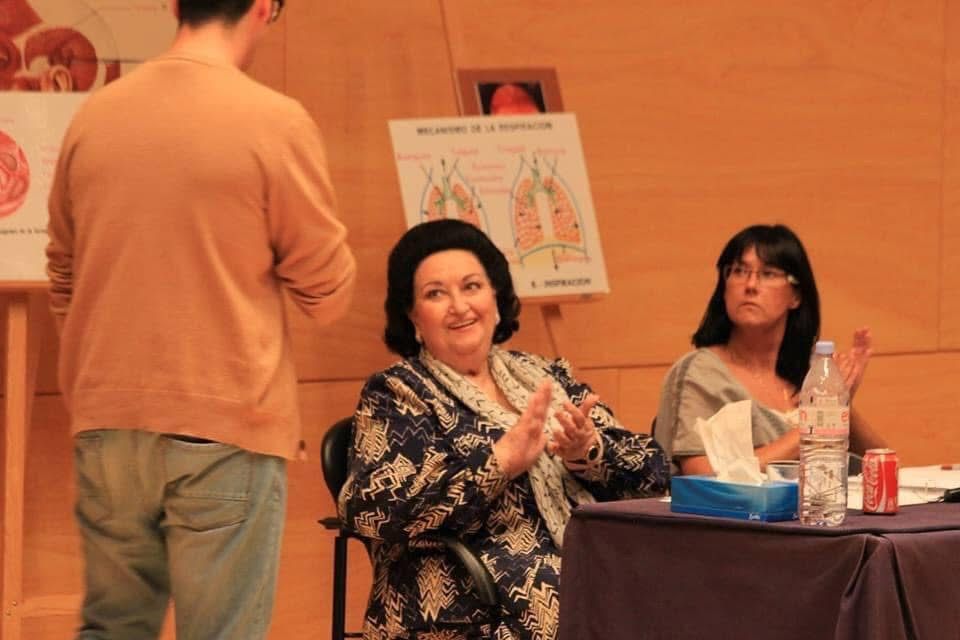
© Claudia Tatin · Montserrat Caballé applauding Víctor at his first audition in front of Zaragoza’s Auditorium (2013).
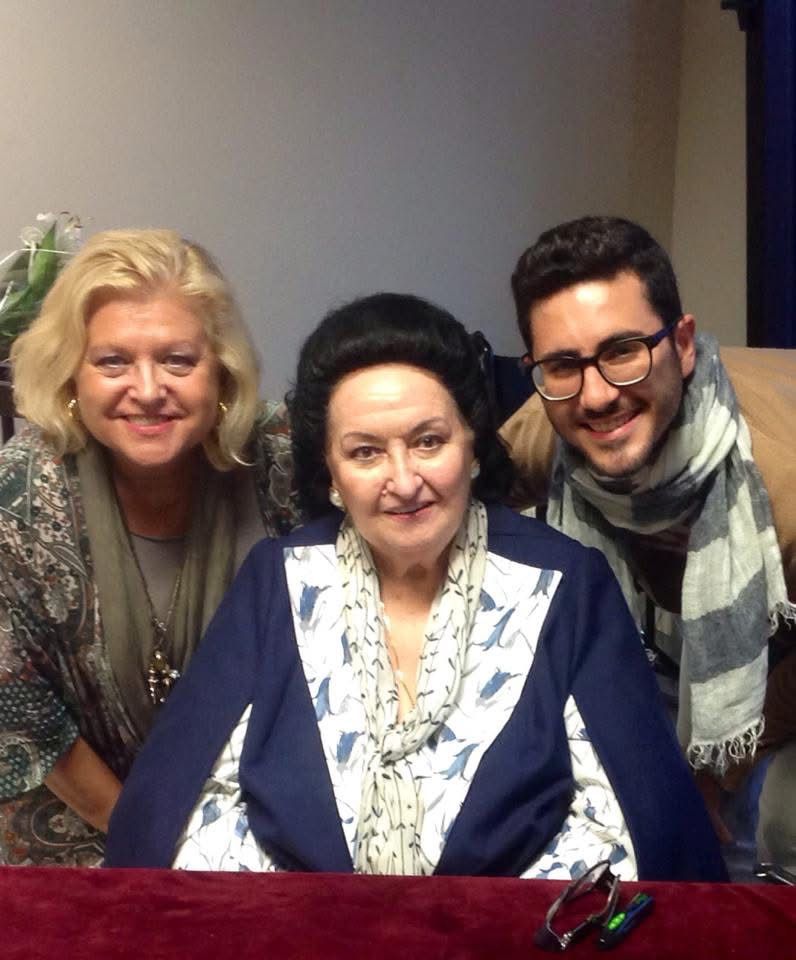
© Gran Teatre del Liceu · Francesca Roig, Montserrat Caballé and Víctor Jiménez Díaz after a private lesson.
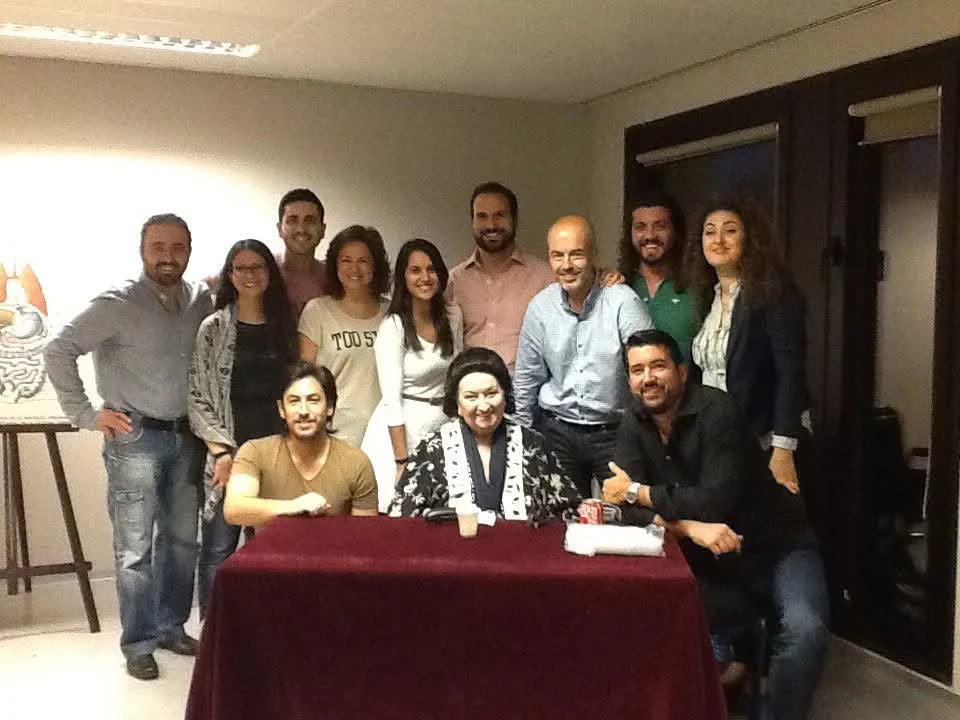
© Gran Teatre del Liceu · Montserrat Caballé and his selected students with maestro Ricardo Estrada.
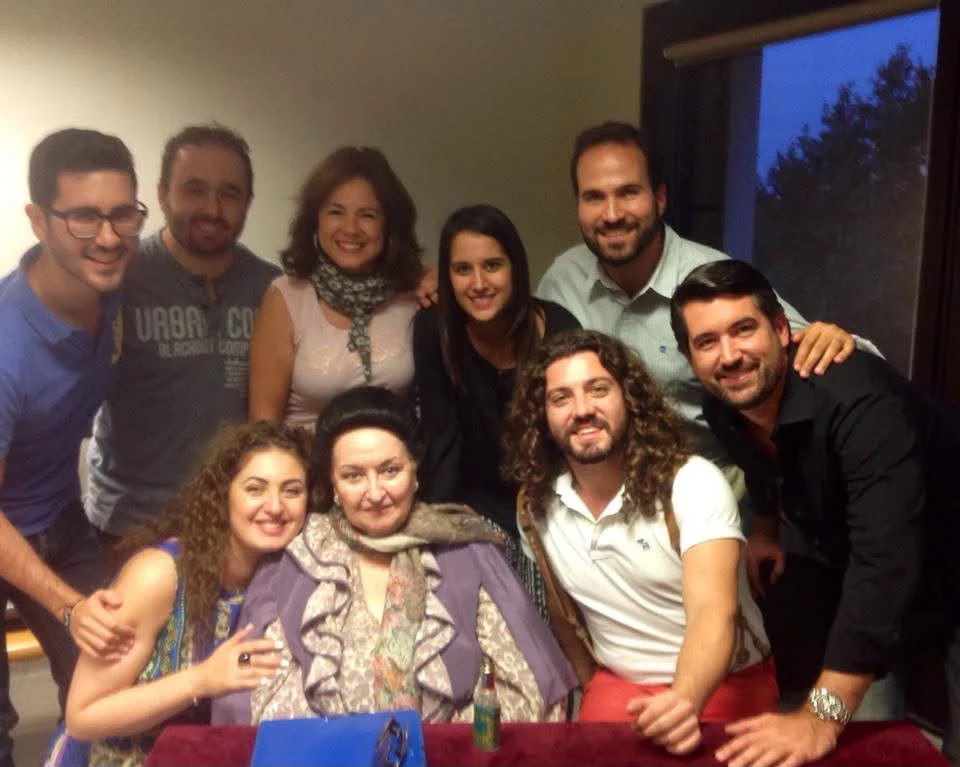
© Gran Teatre del Liceu · Montserrat Caballé with some of her selected students after a week of private lessons.
© All rights are reserved
"Delicate rendition of Verdi Prati from Handel’s opera Alcina, a reading full of feeling and expressiveness."
INSTITUTIONAL CONFIDENCE AT THE HIGHEST LEVEL UNDER REAL PRESSURE
5. International Trust
A documented record of critical responsibility in major European institutions, under extreme time constraints, with full artistic, musical and professional accountability.
5.1. Jean-Claude Malgoire & Early International Endorsement — 2015 / 2017
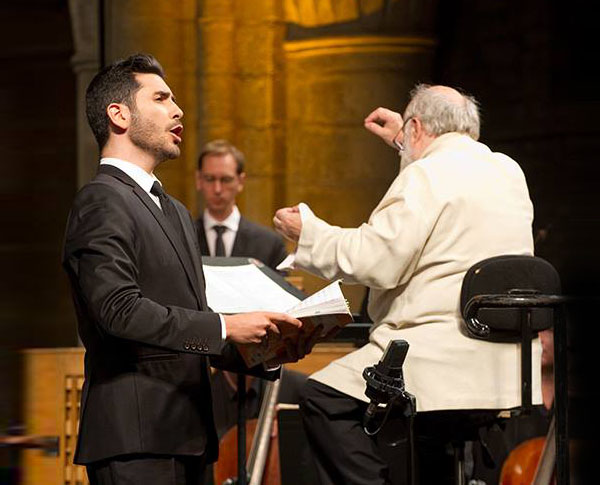
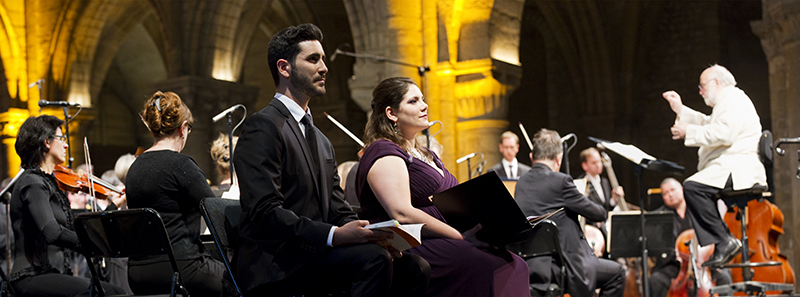
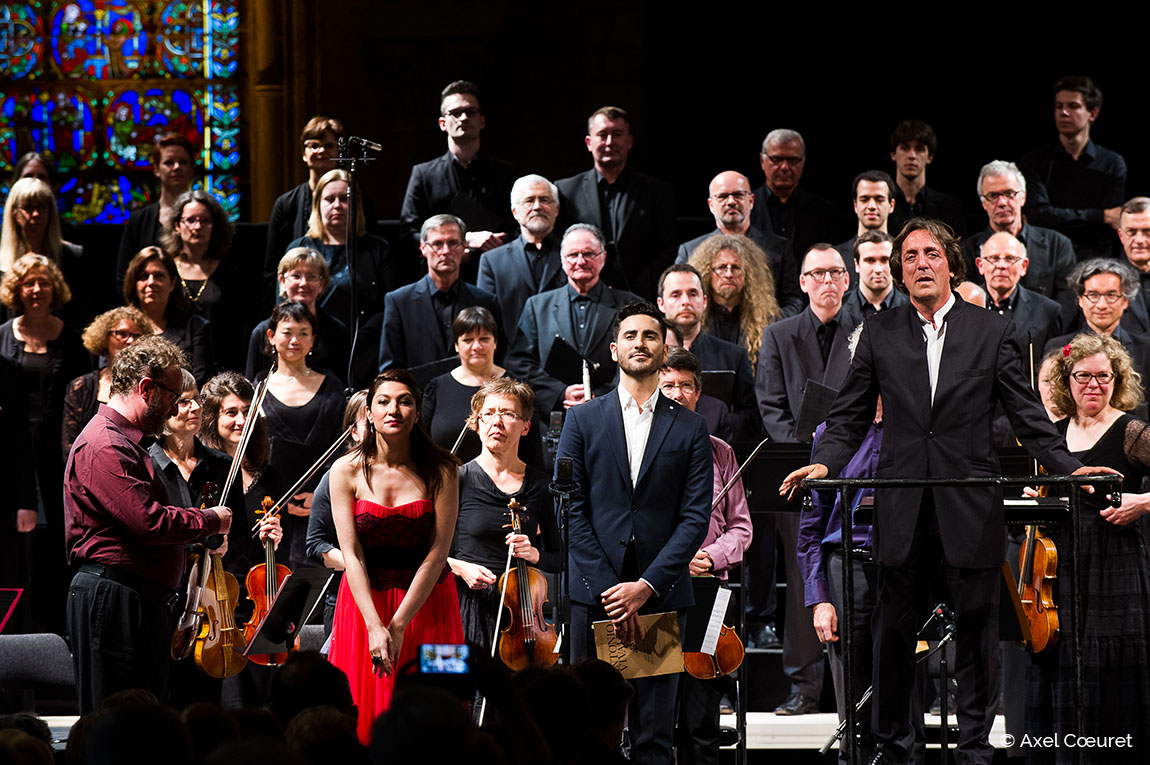
Winner of the Voix Sacrées – Talents Lyriques de Reims competition — including the Exceptional Audience Prize and the Friends of the Reims Opera Prize — Víctor was handpicked by Jean‑Claude Malgoire for his major international soloist debut in Handel’s Messiah at Les Flâneries Musicales de Reims, performed before 3,000 people at the Basilique de Saint‑Remi (2015).
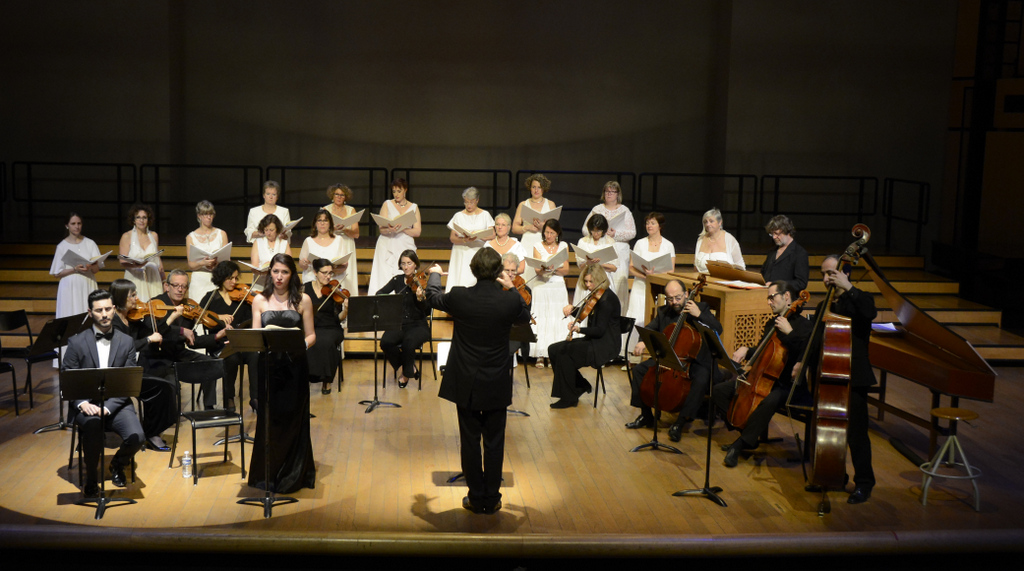
Following this debut, Víctor continued to appear regularly in Reims (2015–2016) under Jean‑Marie Puissant, performing as soloist in projects for the Conservatoire and in multiple appearances at Les Flâneries Musicales: Stabat Mater (Pergolesi), Gloria RV 589 (Vivaldi), and the virtuoso contralto cantata Longe mala, umbrae, terrores RV 640. In 2016, he also appeared as soloist in the UNESCO celebrations Reims chante avec ses Chœurs. These recognitions attracted the attention of Ópera Actual, which highlighted him that year as one of the most promising young countertenors.
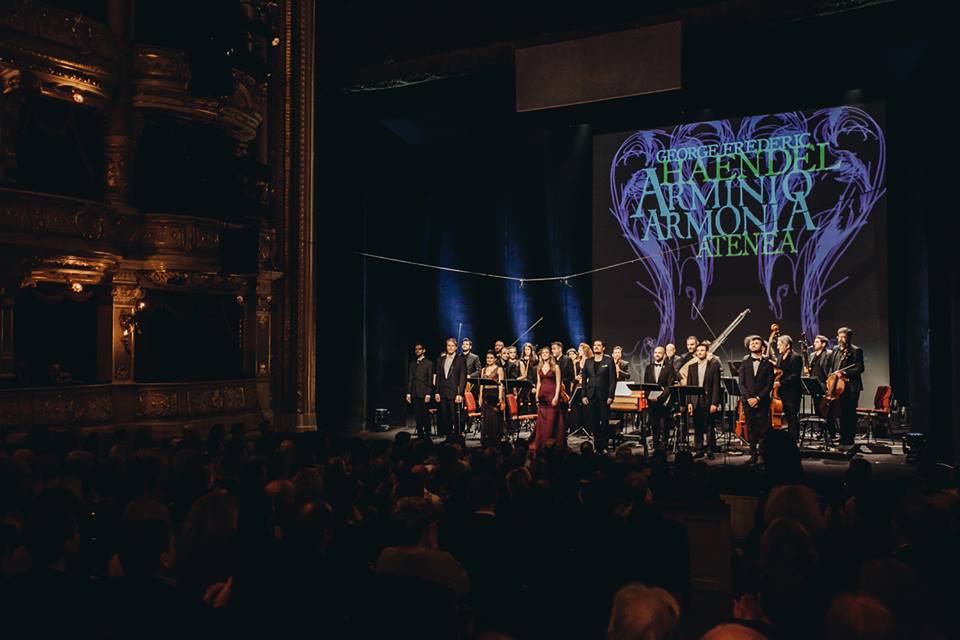
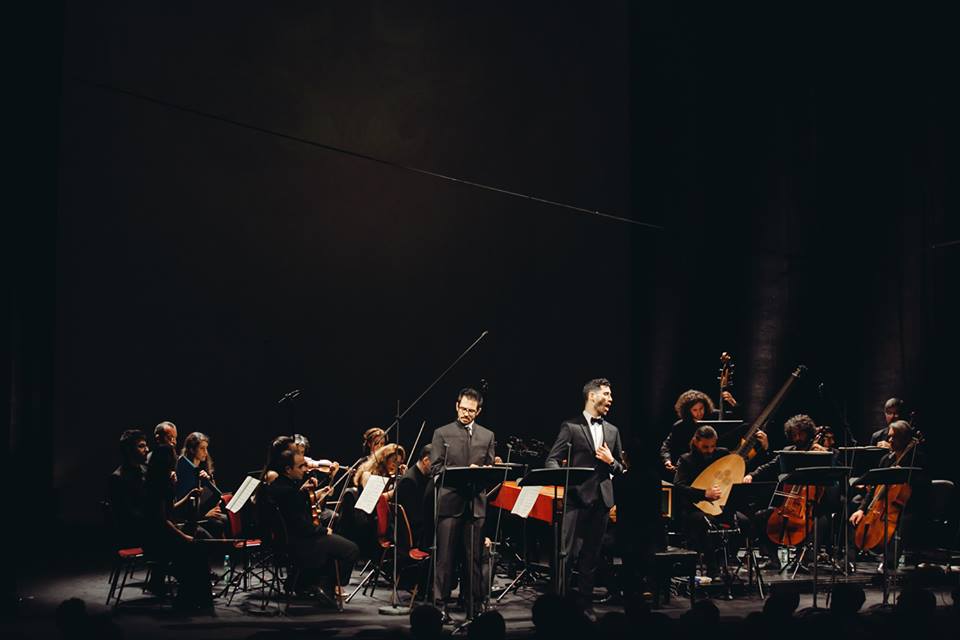
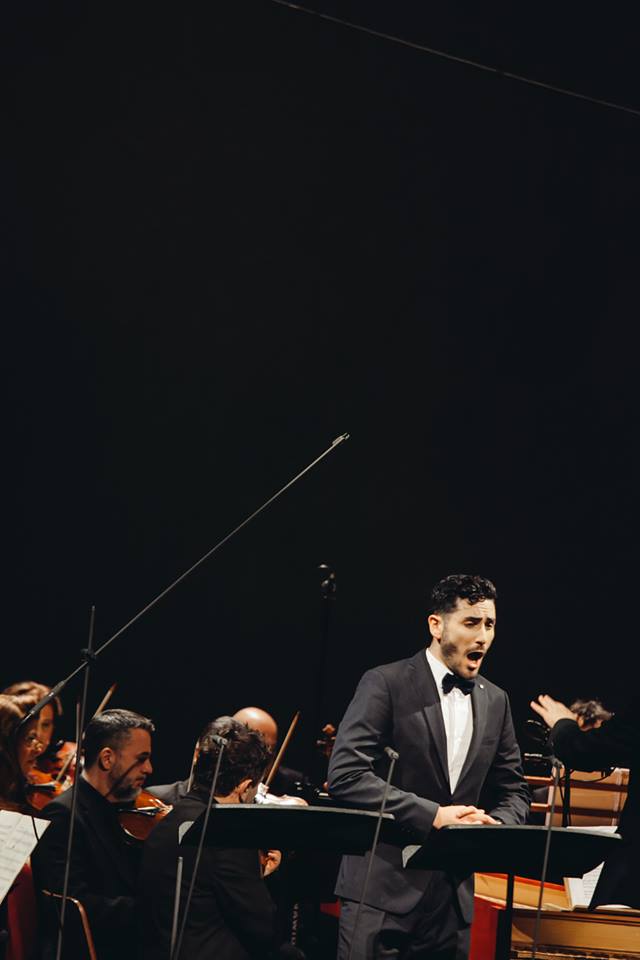
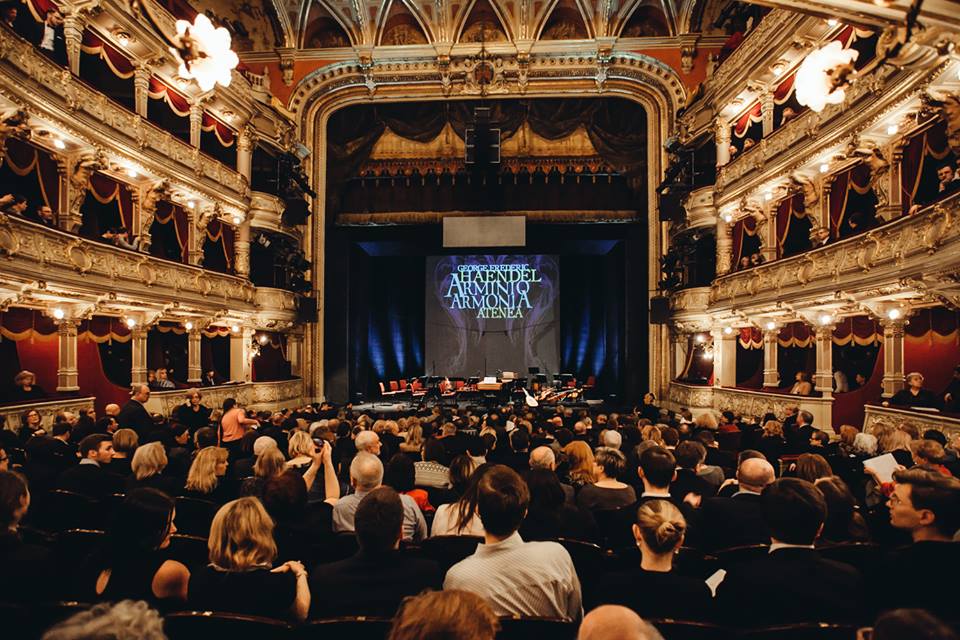
In parallel, Víctor expanded his international profile through multiple awards, including the Hariclea Darclée competition (2015) in Romania. Shortly afterwards, he made his operatic debut in Kraków with Handel’s Arminio (Opera Rara / Parnassus / Decca), under George Petrou and Max Emanuel Cencic. The premiere was broadcast live worldwide through the European Broadcasting Union, marking a decisive early milestone in his international recognition.
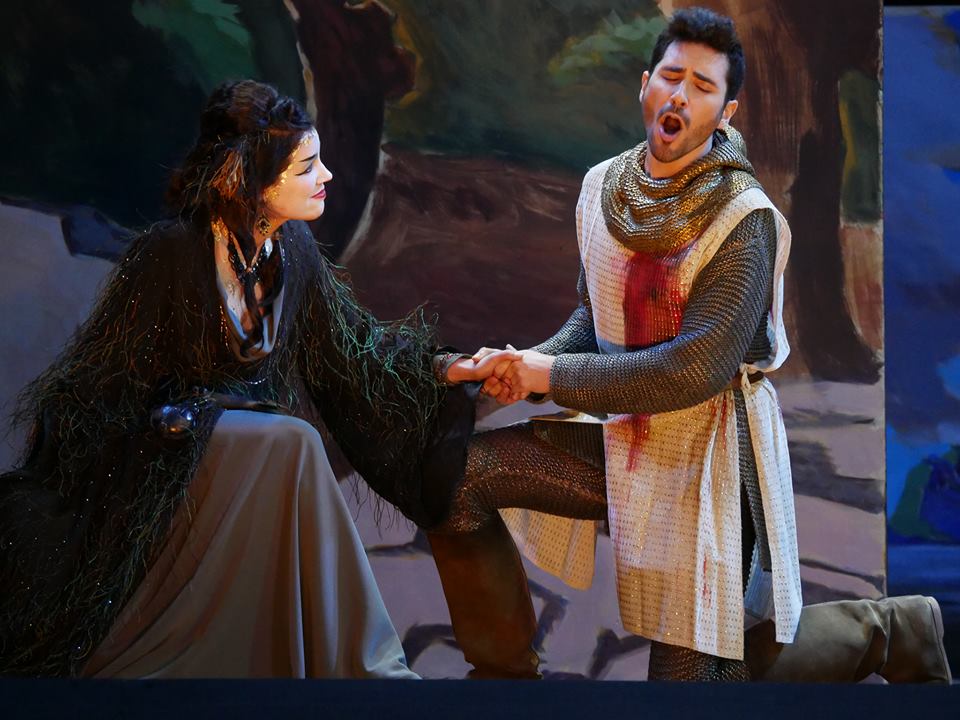
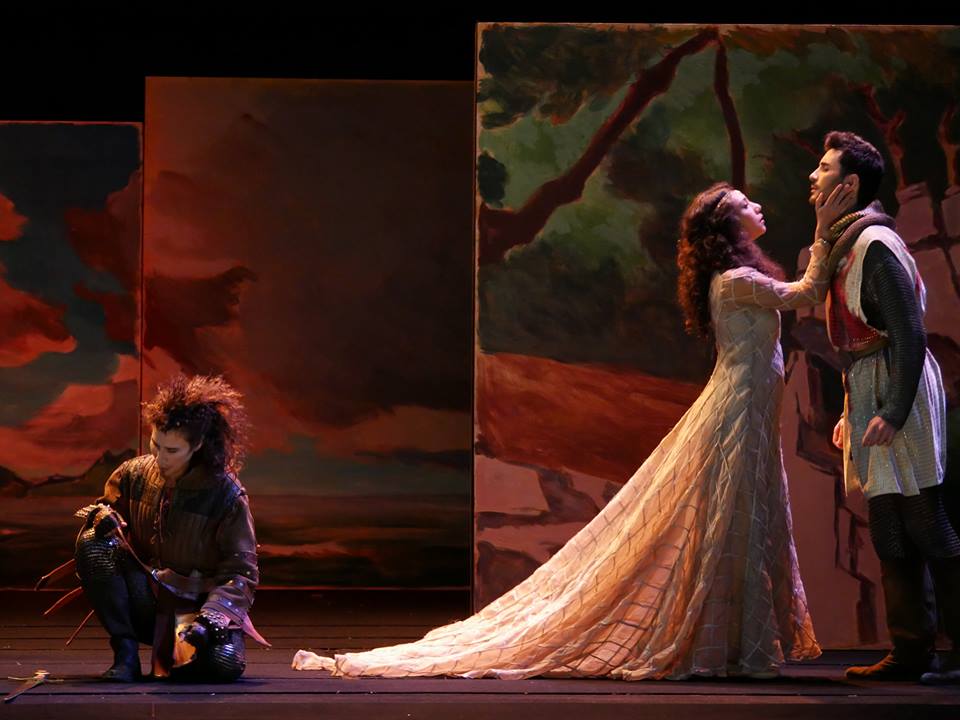
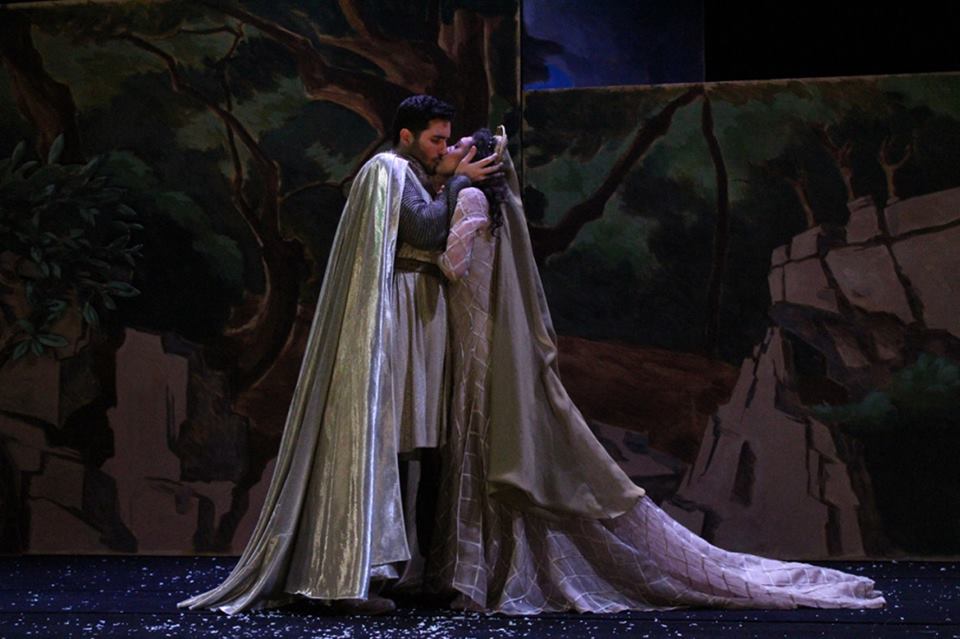
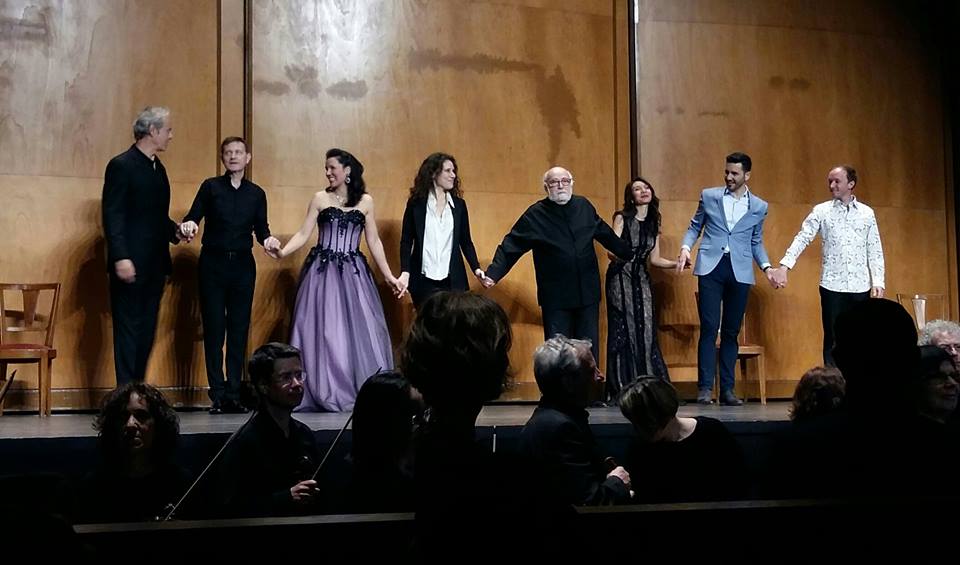
Jean‑Claude Malgoire later selected him for his next staged baroque production: Vivaldi’s Orlando Furioso, created at the Atelier Lyrique de Tourcoing and subsequently performed at the Théâtre des Champs‑Élysées in Paris (2017).
-

- Concours Lyrique Reims Voix Sacrées 2015

-
- © Axel Cœret · France debut with Jean-Claude Malgoire
-
- Flâneries Musicales de Reims © Handel Messiah avec Jean-Claude Malgoire 2015

-
- Flâneries Musicales Reims © A. Coeuret

-
- Flâneries Musicales Reims © A. Coeuret
-
- CRR Reims © Jean-Michel Beix

-
- © Jean-Michel Beix · CRR Reims
-
- Flâneries Musicales de Reims © Axel Cœret

-
- Flâneries Musicales de Reims © Axel Cœret

-
- Flâneries Musicales de Reims © Axel Cœret

-
- Flâneries Musicales de Reims © Axel Cœret
-
- Flâneries Musicales de Reims © Axel Cœret

-
- © Hasenien Dousery · Krakowskie Biuro Festiwalowe
-
- © Hasenien Dousery · Krakowskie Biuro Festiwalowe
-
- © Hasenien Dousery · Krakowskie Biuro Festiwalowe
-
- © Hasenien Dousery · Krakowskie Biuro Festiwalowe
-
- © Victoria Duhamel · Tourcoing Orlando Furioso
-
- © Victoria Duhamel

-
- © Victoria Duhamel · Tourcoing Orlando Furioso
-
- © Victoria Duhamel

-
- © Émily Cauwet-Lafont · Atelier Lyrique de Tourcoing
-
- © Émily Cauwet-Lafont

-
- © Émily Cauwet-Lafont

-
- Théâtre des Champs-Elysées © Bernard Talgo
The real staged operatic debut came with Medoro from Vivaldi's Orlando Furioso signed at Tourcoing's Atelier Lyrique by Jean-Claude Malgoire
The operatic international debut was as Tullio in Handel's Arminio concert version signed by George Petrou and Max Emanuel Cenčić at Krakow's Opera Rara Festival
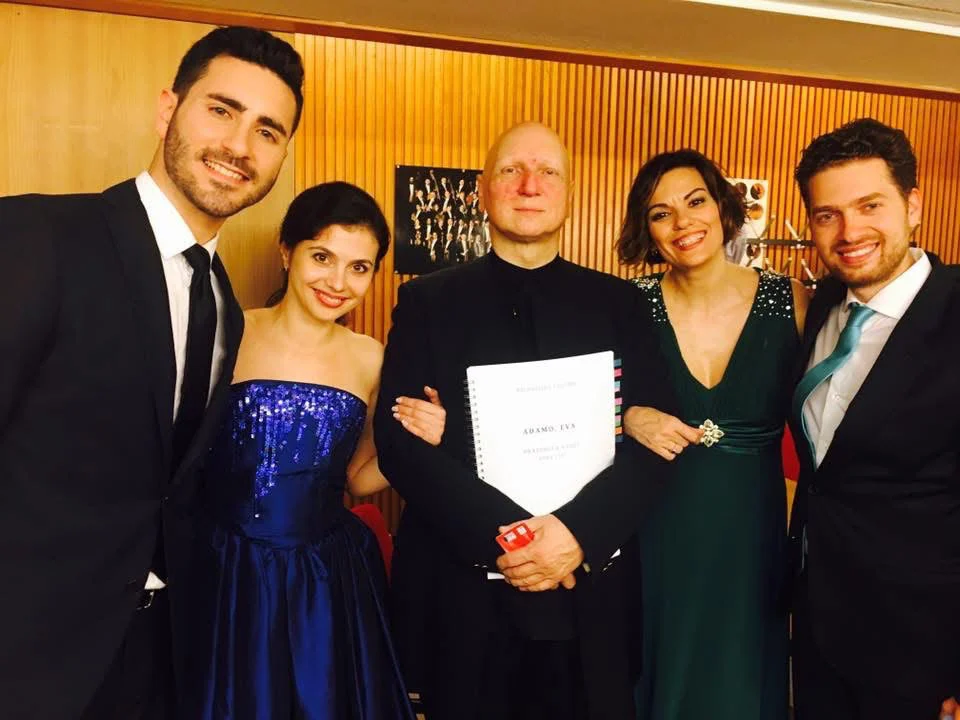
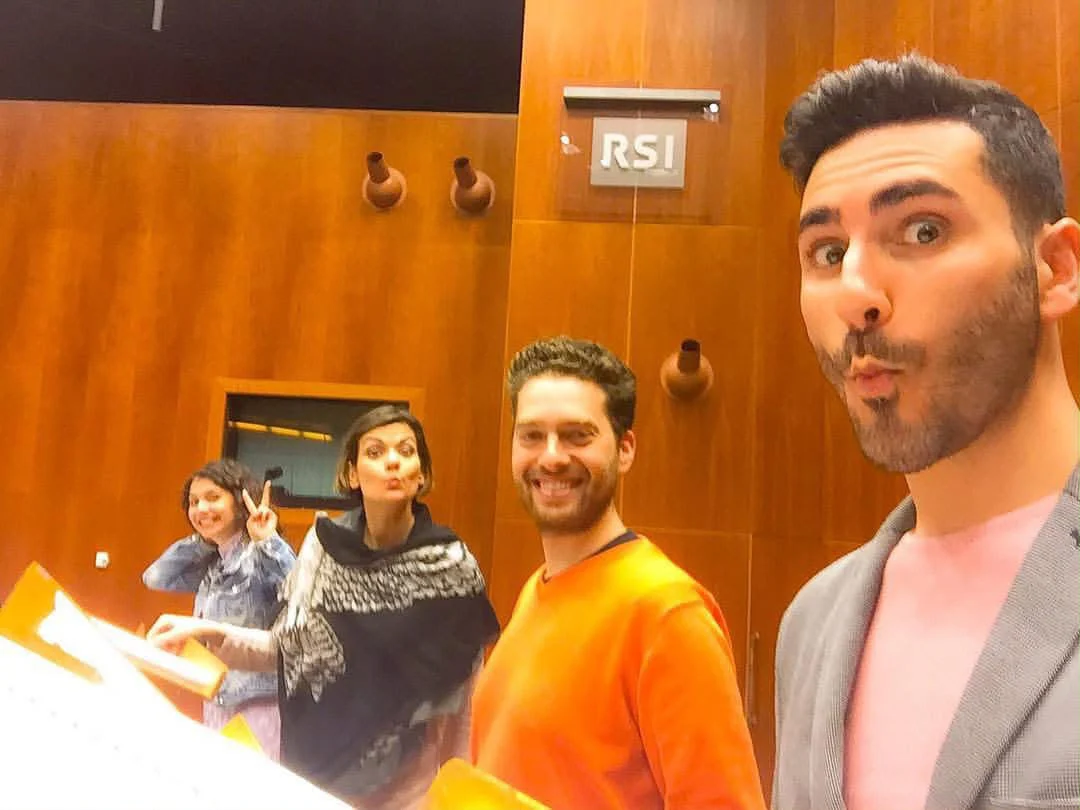
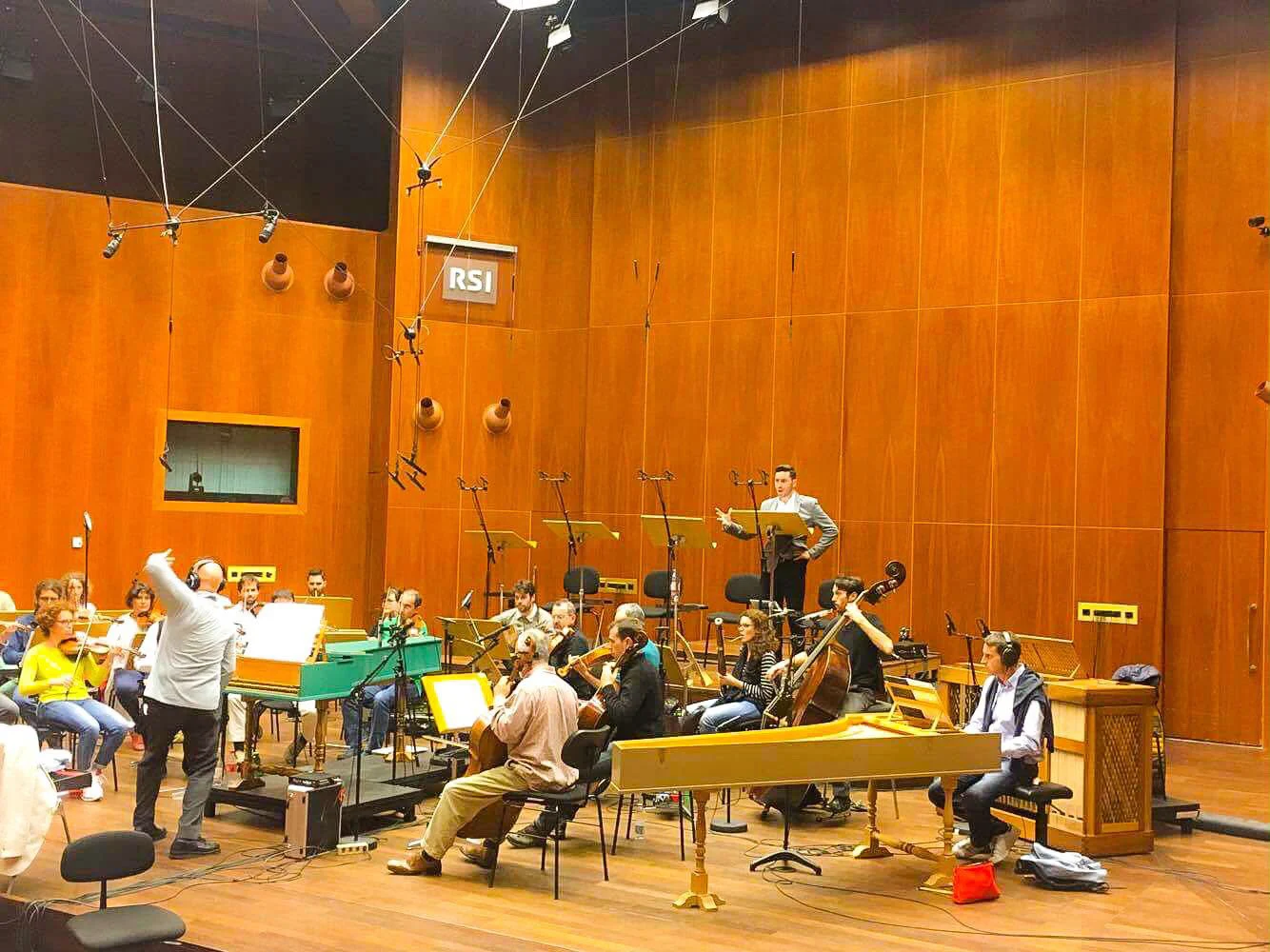
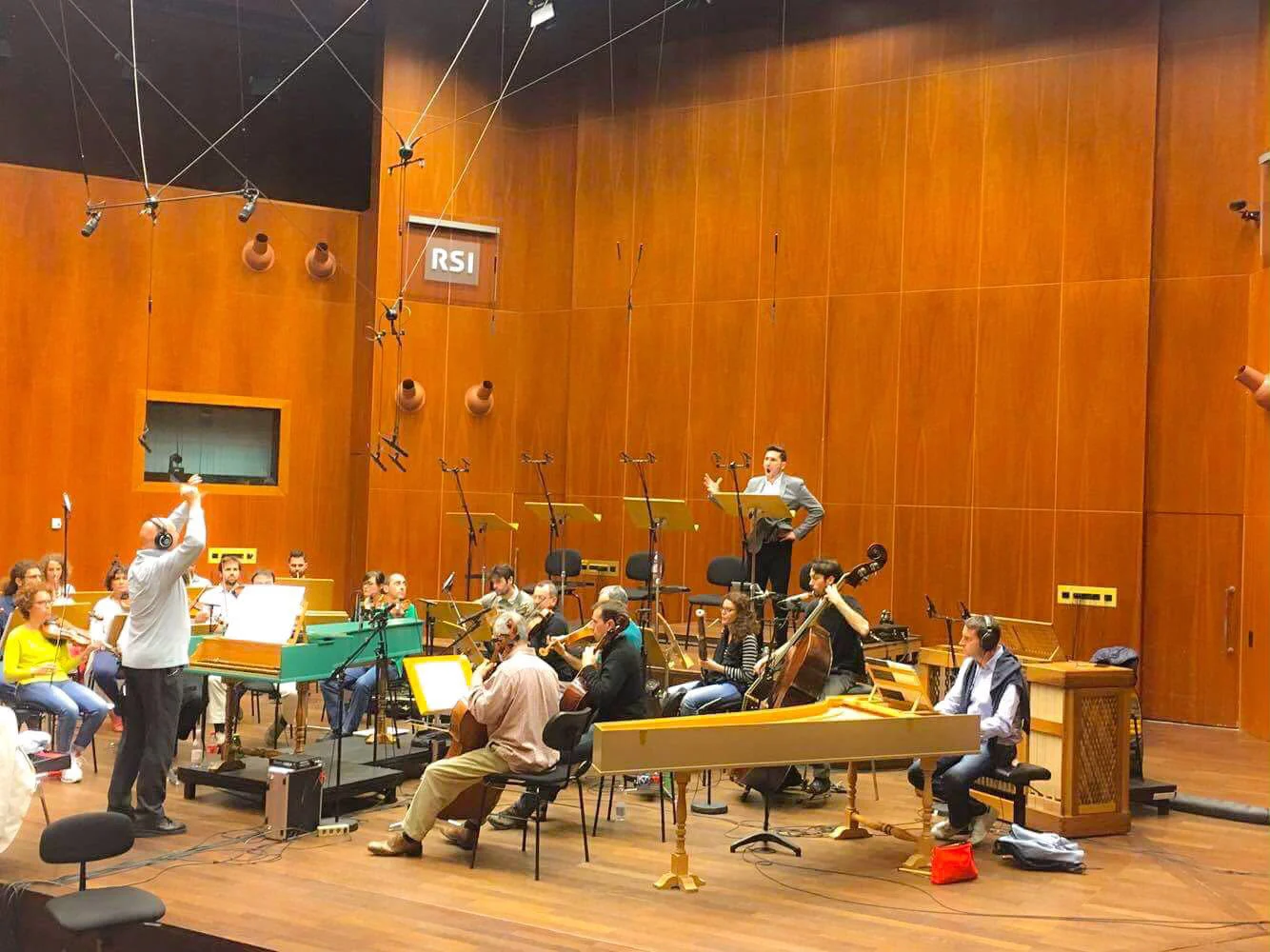
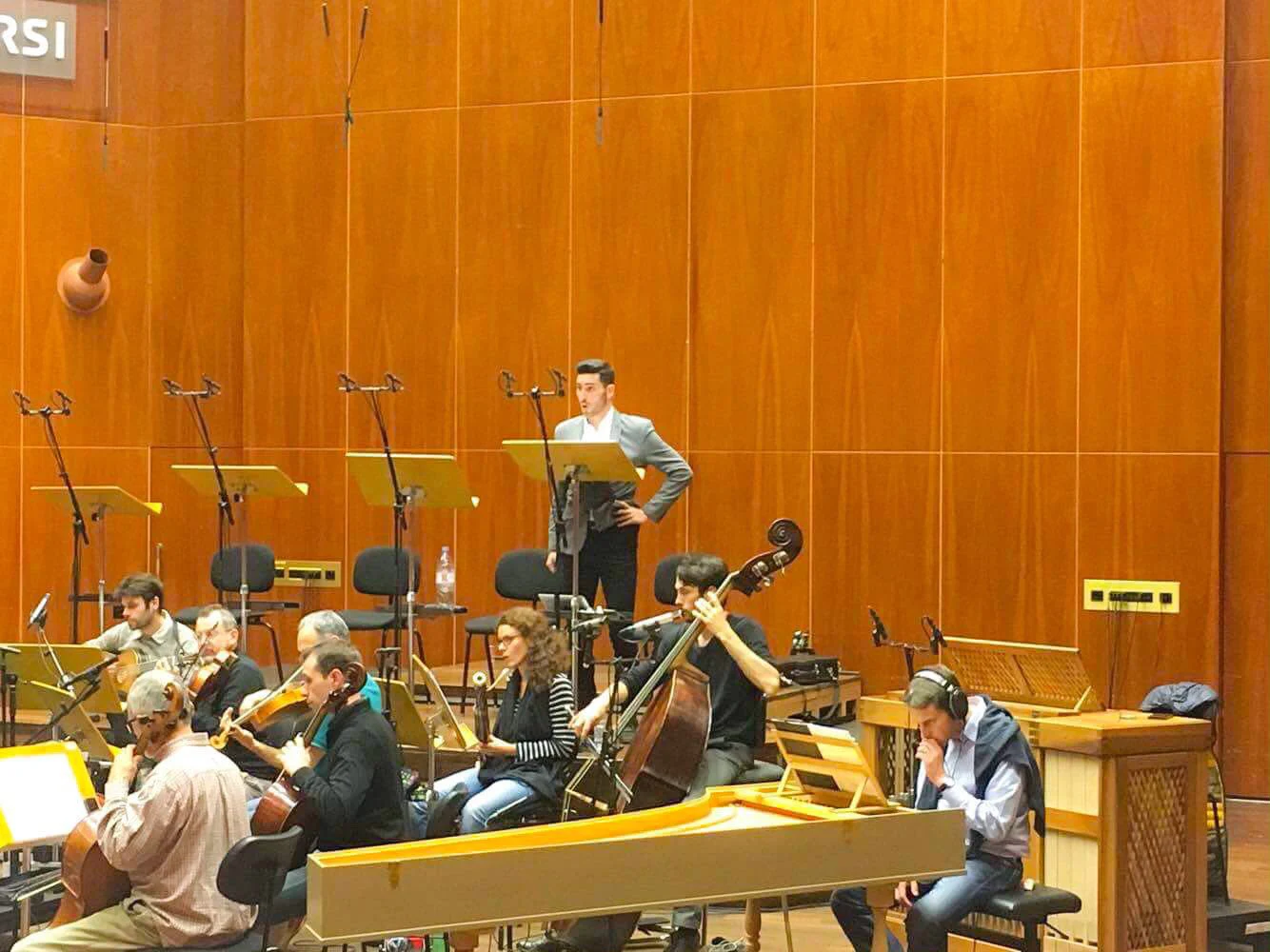
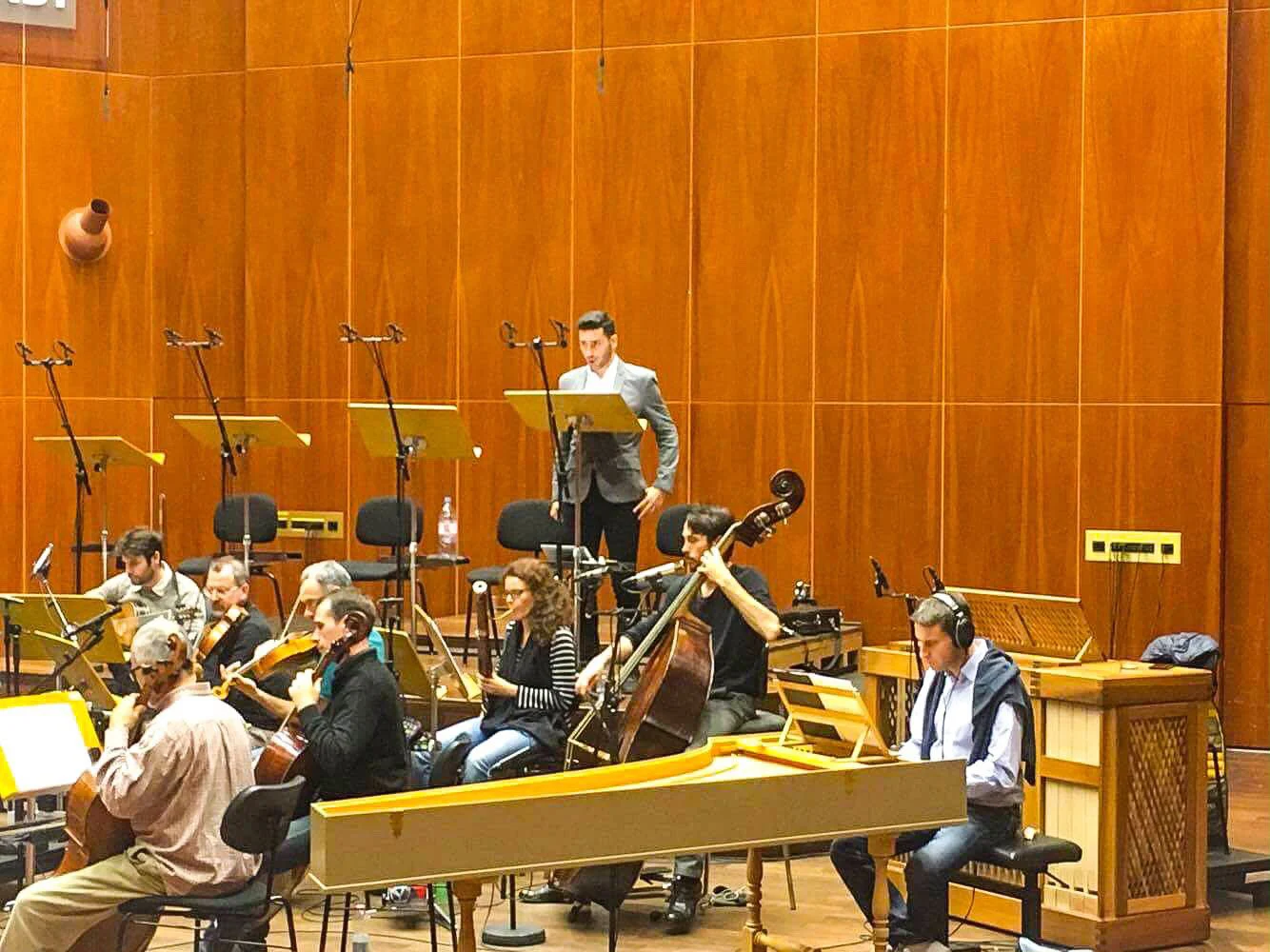
5.2. Diego Fasolis & I Barocchismi, Lugano (Switzerland) — 2017
World modern premiere of Galuppi’s Adamo ed Eva (Rome, 1747) Emergency replacement of Yuri Minenko Conductor: Diego Fasolis · Orchestra: I Barocchisti · Venue: Auditorio Stelio Molo (RSI)
Response Window: 6 days
Integrity Level: Critical cover / World Premiere / Worldwide Broadcast
The Auditorio Stelio Molo (RSI Radiotelevisione Svizzera) programmed the world modern premiere of Galuppi’s Adamo ed Eva in its original 1747 Roman version, requiring four soloists including a male contralto for the highly virtuosic role of the Angelo di Giustizia — a part demanding the full technical and expressive arsenal of an eighteenth‑century virtuoso castrato.
Yuri Minenko, scheduled in peak career form, cancelled one week before production. The project — consisting of a full‑week studio recording for the Swiss Radio‑Television archive and a final concert broadcast worldwide via the European Broadcasting Union (EBU) — was left without its principal contralto.
The remaining amazing cast included Vassilis Kavayas (Adamo), Roberta Mamelli (Eva), and Liudmila Velinskaya (Misericordia).
Having auditioned years earlier in Barcelona for Diego Fasolis, one of the world’s leading baroque conductors, Víctor was immediately contacted by Fasolis’s office the morning after his Paris debut (Orlando Furioso, Théâtre des Champs‑Élysées), following an intense period that included Arminio in Kraków and a month‑and‑a‑half residency in Tourcoing.
Víctor requested the score, read it, and confirmed that the role was extremely demanding but within his vocal possibilities with committed work. Despite requiring months of technical preparation, he accepted the responsibility based on Fasolis’s trust. The contract was signed within 24 hours.
He learned the entire role in under a week, wrote his own variations and cadences, and arrived in Lugano fully prepared in five days. The recording and live broadcast concert were a complete success, consolidating him as a specialist in the repertoire of the great Italian contralto castrati of the eighteenth century.
-
- Copyright © RSI – Radiotelevisione Svizzera
-
- Copyright © RSI – Radiotelevisione Svizzera
-
- Copyright © RSI – Radiotelevisione Svizzera
-
- Copyright © RSI – Radiotelevisione Svizzera
-
- Copyright © RSI – Radiotelevisione Svizzera
-
- Copyright © RSI – Radiotelevisione Svizzera
5.3. Gran Teatre del Liceu (Barcelona) — 2019
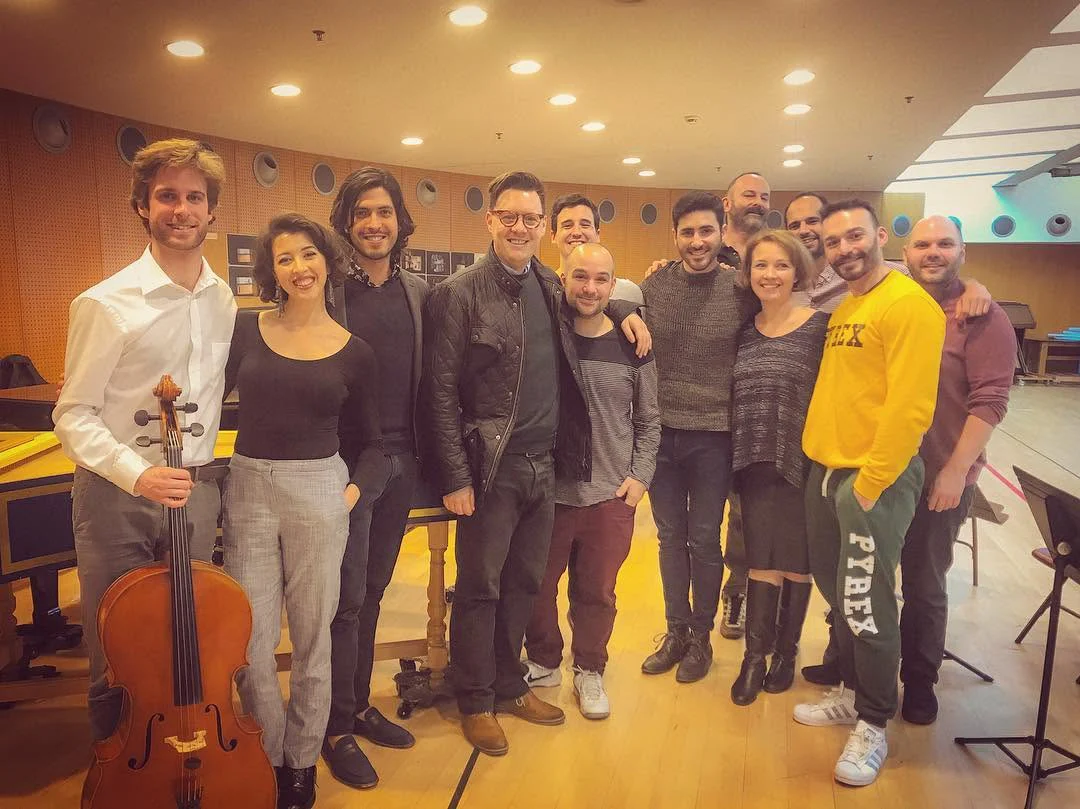
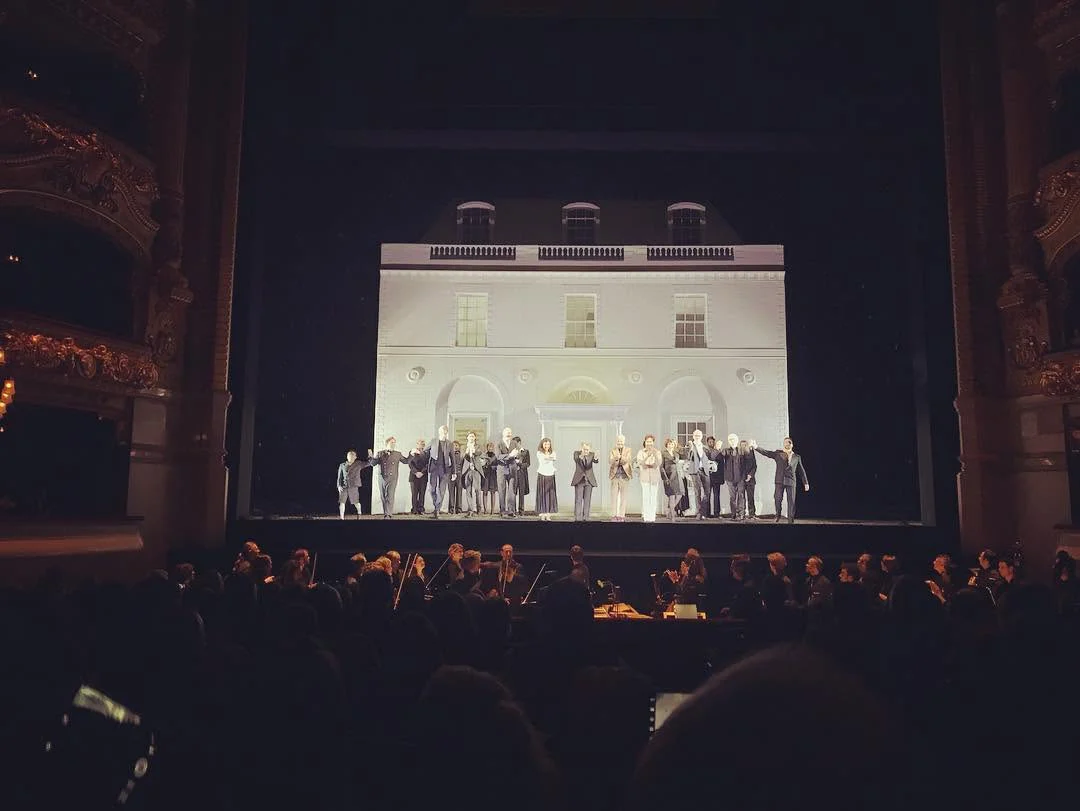
Sole cover for Bejun Mehta as Bertarido in Handel’s Rodelinda (opposite Lisette Oropesa). Conductor: Josep Pons / David Bates · Director: Claus Guth / Marcelo Buscaino
Response Window: 7 days
Integrity Level: Critical cover / Staged In House Debut / Worldwide broadcast
When Bejun Mehta was unable to attend staging rehearsals due to health reasons, the Gran Teatre del Liceu faced the risk of losing its Bertarido for a major production featuring Lisette Oropesa — today one of the world’s leading sopranos — in her highly anticipated House Debut. Christina Scheppelmann, artistic director (2014–2019), urgently sought a singer capable of assuming the role in rehearsals and remaining fully available for the entire run — a responsibility impossible to cover through the international market on such short notice.
Víctor accepted the request, driven by commitment to his native city and to the institution where he had trained. He was appointed to bring the role to full rehearsal readiness and to serve as the sole cover for the entire production. He re‑memorised the complete role and wrote all his own variations and cadences, including the extensive recitatives required for seamless staging.
He rehearsed intensively for two weeks without Mehta, enabling the cast and production team to work without interruption. Mehta ultimately arrived in perfect condition for general rehearsals and performances. Víctor remained under contract for the entire run, inside his dressing room during every performance, fully ready to step onstage at a moment’s notice until the beginning of the second half.
-
- © Gran Teatre del Liceu · Rodelinda (2019)
-
- © Gran Teatre del Liceu · Rodelinda (2019)
5.4. Theater an der Wien (Vienna) — 2016/2019
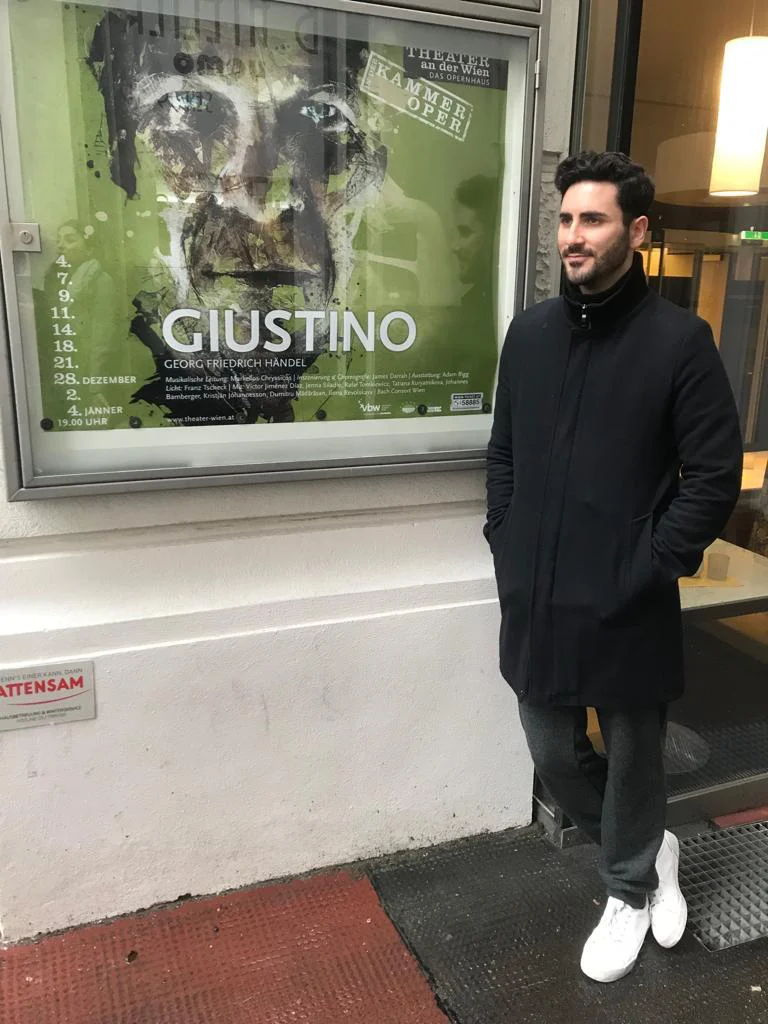
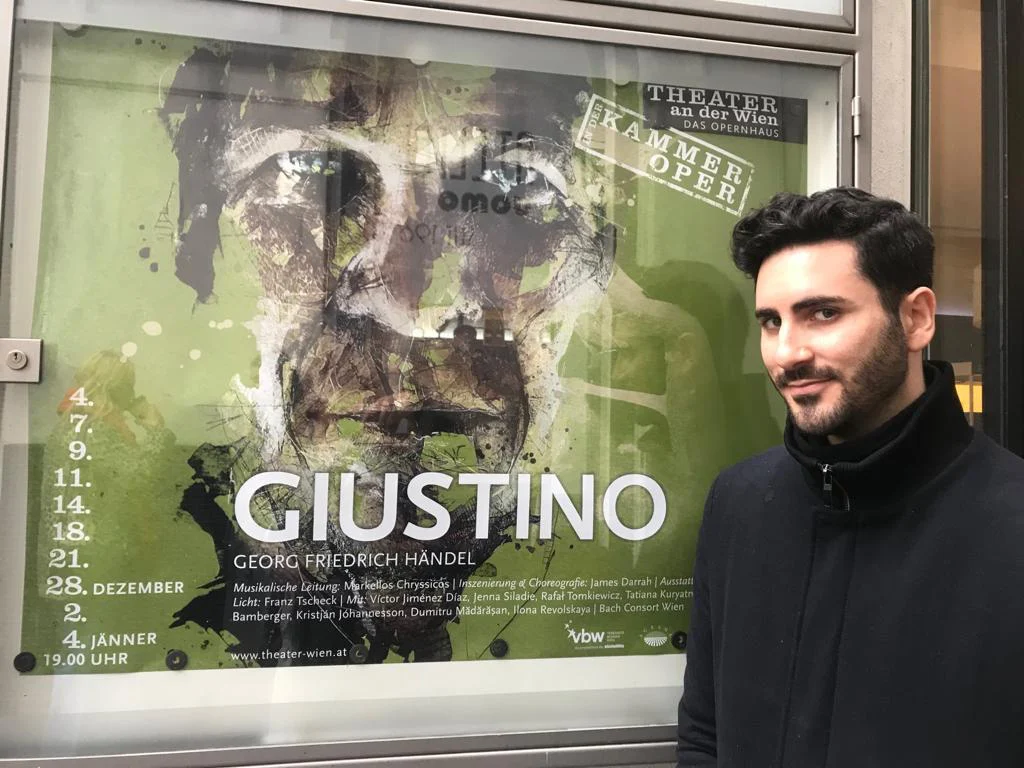
Emergency title‑role replacement in Handel’s Giustino one week before rehearsal kickoff. Conductor: Markellos Chryssicos · Director: James Darrah
Response Window: 7 days
Integrity Level: Critical cover / Staged In House Debut
Víctor’s relationship with Josef Hussek — former Artistic Director in Hamburg, Salzburg, and Vienna — began when Hussek heard him at the Hariclea Darclée International Competition (Romania), where Víctor won and Hussek served on the international jury. Deeply impressed, Hussek became an unconditional supporter, accompanying him to auditions at major institutions including the Brucknerhaus Linz, the Salzburg Festival, Theater Magdeburg, and other German and Austrian festivals.
At the Theater an der Wien, during an audition attended by Hussek and his successor Sebastian Schwarz, Víctor was tested on the spot: Schwarz asked him to improvise Ottone’s exit aria from Handel’s Agrippina directly on stage. Víctor requested the score — provided immediately by the theater — and in five minutes built the entire scene from memory, impressing the artistic team. As a result, he was offered the cover for Ottone in that season’s production, sung by Filippo Mineccia.
This connection proved decisive when, in 2019, the Theater an der Wien lost its title‑role singer for Handel’s Giustino one week before rehearsals of the new production. With no possibility of finding a Handel specialist capable of learning such a demanding role, arriving historically informed and fully prepared within a seven‑day window, and assuming full artistic responsibility in the city of Vienna, Ugo Varela (Artistic Secretary, who had been present at Víctor’s 2016 audition) strongly championed Víctor’s candidacy, and Jochen Breiholz — now Director of the Opéra National de Lyon — entrusted him with the responsibility.
The role, created in 1736 for Domenico Annibali, demands extreme virtuosity: 14 recitatives, several choruses, and 7 highly difficult arias. Víctor interrupted his major musical residency in Barcelona (Fundació Catalunya‑La Pedrera), where he was preparing a contemporary programme including a world premiere by Raquel García‑Tomás, to undertake the emergency.
He studied, wrote his own variations, and memorised the entire role within the critical window, arriving fully prepared for three weeks of intense rehearsals. During this period, he sang an average of ten hours a day at the Kammeroper while continuing to prepare his Barcelona programme, which later achieved resounding critical success.
-
- © Víctor Jiménez Díaz · Theater an der Wien (2019)
-
- © Víctor Jiménez Díaz · Theater an der Wien (2019)
-
- © Víctor Jiménez Díaz · Theater an der Wien (2019)
-
- © Víctor Jiménez Díaz · Theater an der Wien (2019)

-
- © Víctor Jiménez Díaz · Theater an der Wien (2019)

-
- © Víctor Jiménez Díaz · Theater an der Wien (2019)

5.5. Teatro Real (Madrid) — 2022
Doubling and emergency cast readiness for the world premiere of El Abrecartas by Luis de Pablo. Conductor: Fabián Panisello · Director: Xavier Albertí
Response Window: 7 days
Integrity Level: Critical cover / Staged In House Debut / Worldwide Broadcast
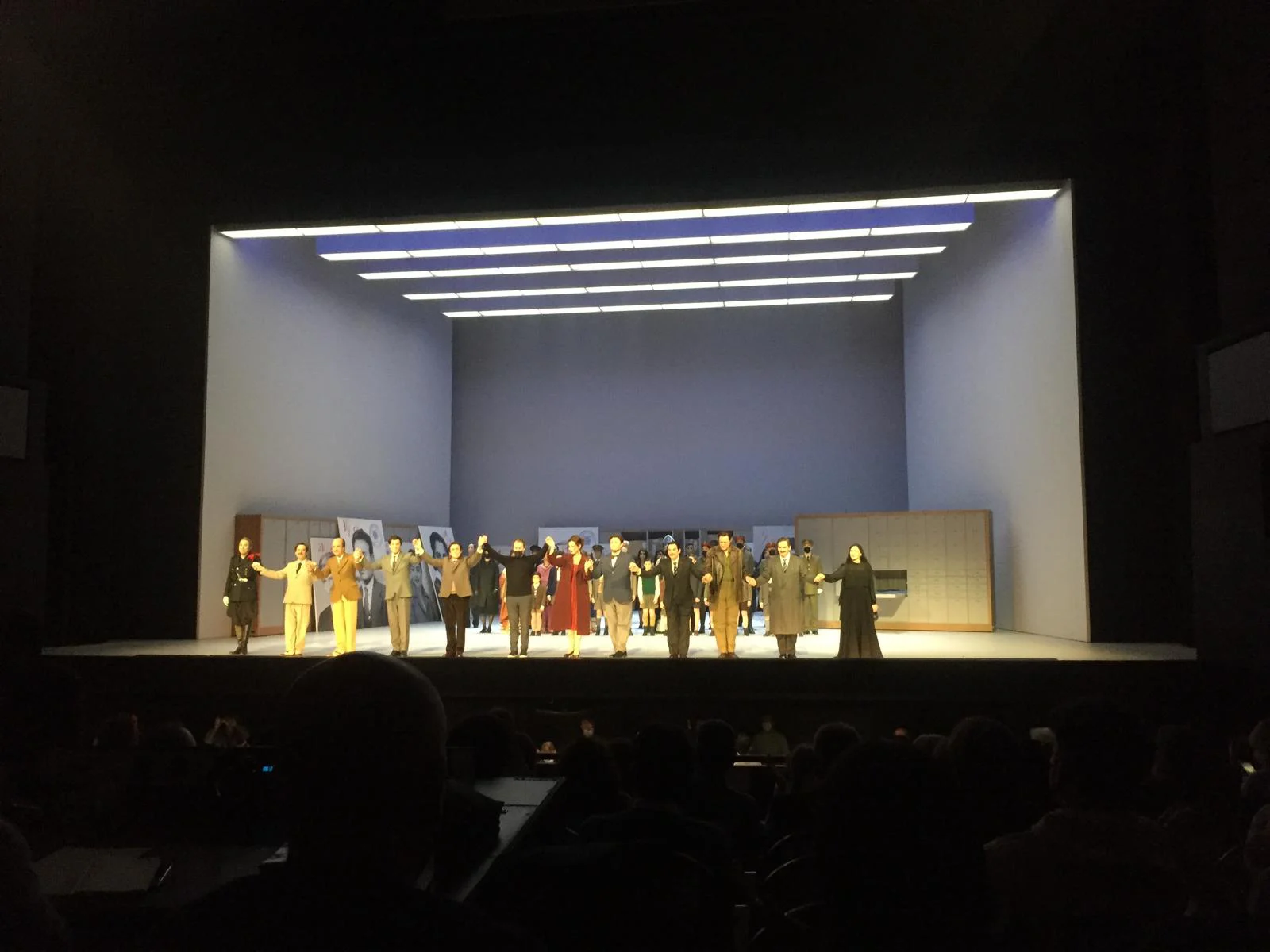
During the strict post‑pandemic period, Joan Matabosch, artistic director of the Teatro Real, implemented unprecedented measures to safeguard the world premiere of El Abrecartas by Luis de Pablo. A previous repertoire production had required a full last‑minute replacement cast due to COVID‑19 — a solution impossible for a brand‑new contemporary world premiere.
When the Real activated its emergency protocol, rehearsals had already been underway for 1–2 weeks. Víctor was notified with a 7‑day response window to learn and memorise a new contemporary role, arrive fully prepared, and enter the theater’s strict isolation system, which included weekly tests and continuous musical supervision by the house’s vocal coaches.
Víctor remained inside the theater for the entire final rehearsal phase and the full run of performances, ready to step into any moment, even the day of the live international broadcast. No substitutions were ultimately required, and the opera was successfully streamed worldwide. The Teatro Real placed full institutional trust in Víctor to master a brand‑new role and maintain emergency readiness throughout.
-
- © Víctor Jiménez Díaz · Teatro Real (2019)

-
- © Víctor Jiménez Díaz · Teatro Real (2019)
THE ENDORSEMENT OF JOSEF HUSSEK
A decisive artistic endorsement across major European institutions

© Víctor Jiménez Díaz with Josef Hussek after his audition before the Salzburg Osterfestspiele artistic direction (2016)
Josef Hussek — former Artistic Director in Hamburg, Vienna, and Salzburg — became a key figure in Víctor’s artistic development after hearing him at the Hariclea Darclée International Competition, where Víctor won and Hussek served on the international jury. Deeply impressed, Hussek often described Víctor in professional contexts through a series of precise technical comparisons drawn from his long experience in major European houses. He noted that Víctor’s metallic projection reminded him of the technique Birgit Nilsson employed to carry over large orchestras; that Víctor’s dramatic and academic depth of preparation evoked the artistic profile of Leonie Rysanek, whose emotional intensity became fully visible on stage; that the central register of Víctor’s voice possessed the fullness, timbre and luminosity he had heard so often in Fiorenza Cossotto and Elena Obraztsova; and that Víctor’s performing imagination and phrasing recalled what he had witnessed from Montserrat Caballé during her engagements in Vienna. These were the arguments Hussek habitually used to present and recommend Víctor in his professional circle.
Hussek’s support was constant and active. He:
The trust was mutual: through this relationship, Víctor was able to propose soprano Irene Theorin for Brünnhilde at the Wiener Staatsoper (2018–19), where she was ultimately engaged.
Hussek remained a committed mentor until his passing in 2023, deeply enthusiastic about Víctor’s historical knowledge, vocal intelligence, and artistic curiosity. They maintained a close friendship until the end of Hussek’s life; shortly before retiring from Salzburg, he even considered opening a small private office to represent Víctor personally alongside a select group of young artists he admired and trust.
PROGRAMMATIC CAPACITY ACROSS THE FULL CONTRALTO FIELD
6. Active repertoire
Víctor maintains an exceptionally extensive active repertoire—hundreds of works and roles across five centuries—available on demand for institutions and programmers. For reasons of intellectual property and continuous expansion, the full repertoire page is provided as a professional tool; this section presents his programmable capacity, organised into four operational archetypes.
6.1. Opera & Stage
Immediate, stage‑ready solution for any role historically written for the contralto voice: technical authority, philological reading and accelerated preparation under high‑pressure conditions in opera and staged works.
6.2. Symphonic & Oratorio
6.3. Contemporary & Premieres
Interpreter for world premieres, commissions and roles written specifically for his vocal architecture: critical reading of the score, direct collaboration with composers and full readiness within reduced timeframes.
6.4. Recitals & Curated Programmes
Turnkey programmes for festivals and concert halls: conceptual, musicological or transversal projects designed to measure, with more than eighty original productions available across early music, classical, bel canto, symphonic and contemporary territories.
The complete professional repertoire page remains accessible through specialised consultation; this block summarises the immediate utility of an artist capable of assuming any work ever written for the contralto voice across the span of music history. In practical terms, programming Víctor is straightforward: if a solo part is written for alto, contralto, male contralto, contraltista, castrato of the lower spectrum or any historically equivalent contralto function—including modern countertenor where the role belongs to the contralto field—Víctor is a fully reliable, musicologically rigorous and artistically authoritative solution.
Every role written for a contralto voice.
One singer.
Five centuries.
Víctor incarnates Gluck’s Orfeo!
Probably one of the most emblematic and historically authoritative male roles in the entire contralto field. A direct demonstration of Víctor’s work in restoring and defending the historical contralto repertoire. Deh placatevi!
Víctor as a driving force in new creation!
Víctor premieres Mariona Vila’s Cloenda from the cycle Fibló, written for him and performed with Maestro Miquel Ortega. A direct demonstration of Víctor’s role as a catalyst for contemporary creation.
SOUND ARCHAEOLOGY AND CRITICAL EDITIONS
7. The Musicologist
Víctor Jiménez Díaz works as an independent musicologist, critical editor and specialist in seventeenth‑ and eighteenth‑century vocal repertoire. His practice combines sound archaeology, philological reconstruction and historically informed composition, producing materials used internationally by soloists, ensembles and opera houses.
He develops critical editions, transcriptions from manuscript sources, and historically informed cadences, variations and ornamentation tailored to each voice type and to obbligato soloists within orchestral scores. This work began in his own artistic projects — where he acts simultaneously as musicologist, critical editor and artistic director — and has expanded into a freelance activity for major artists and institutions.
 Through formal agreements with leading European archives and research centres, he works directly with original manuscripts, complete catalogues and lost or fragmentary works that he continues to recover for performance — both for his own voice and for colleagues across Europe. This research led to his debut album Bocatto di Cardinale (2019), the result of seven years of investigation, and informs the new discographic and staged projects to be released next season.
His portfolio includes historically grounded programmes such as Dowland, Purcell, the Hispanic Baroque (Juan de Hidalgo, Galán, Marín), the Corselli Project with Gustavo Sánchez and Ars Hispana, and the recovery of eighteenth‑century music in Barcelona under the guidance of Andrea Sommer‑Mathis (Austrian Academy of Sciences, OeAW) and Daniele Lipp (University of Vienna). He has conducted extensive archival work in Catalonia — including the Biblioteca de Catalunya — for Bufa Musa Mia, centred on nine Catalan women composers of the nineteenth and twentieth centuries.
His research extends across Europe, exploring Handel and his contemporaries, original sources by Mozart and Haydn, critical reassessment of the Second Viennese School, the Pedrell circle, Iberian nationalisms and early Iberian repertoire such as the Cancionero de Palacio. Through the commissioned project Fins a l’Arrel (Teatre de Lloret) and the Associació dels Amics de la Música, he broadens his work to vocal catalogues by Szymanowski, Chopin, Rebecca Clarke and Ethel Smyth, and to the first Viennese school with specialised studies on Fux and Caldara.
He has dedicated a decade to the relationship between Handel and Alessandro Scarlatti, producing modern world premieres and reconstructions based on the complete surviving manuscript catalogue of Scarlatti. His work also includes critical editions of Meyerbeer, Rossini and Donizetti from original copies and first editions, and research on chamber music by Schumann and Brahms through European archives.
Víctor also studies documentation inherited from his teacher David Mason, including historical vocal‑technique treatises and British and Anglo‑Saxon repertoire, alongside manuscript work on Buxtehude and Telemann, and research on Bach beyond the traditional canon. He has developed monographic studies on John Dowland and Henry Purcell, continuing Mason’s research lines through his various fellowships.
His documentary work includes studies on Ottoboni and Andrea da Bolsena, music of the settecento and ottocento in the Sistine Chapel and Roman archives; the Royal Chapel in Madrid — following Catalan composers and former Montserrat choirboys —; the legacy of Carlo Broschi (Farinelli); and historical chapels such as Santiago, Sevilla and Girona, in collaboration with their directors and leading academic specialists.
Selected professional work:
Oasis Operatica (second‑half‑18th‑century research network led by Ray Martínez): transcriber, critical editor and vocal coach. Clients and collaborators include Nuria Rial, Juan Sancho, Julie Boulianne, Nicolás Tamagna and Daniel Behle — for whom Víctor served as transcriber, critical editor, historically informed composer of cadences and variations, and manuscript supervisor for Kings of Bravura! (Concerto Köln, Bayreuth Baroque 2023; Prospero Classical 2026).
Martín y Soler canzonette project for Serena Sáenz and Pablo Sáinz‑Villegas (Palau de la Música Catalana, international tour): transcription, critical edition and composition of cadences/variations.
World modern premiere — Gli Eroi Spartani (Leal Moreira, 1788), Fundação Casa de Mateus, Portugal (2025): sang Archidamo, served as critical editor of manuscript‑sourced orchestral materials for his scene, and prompted the cast from the wings while performing.
Across his career, Víctor has worked on 1,000+ titles spanning 80+ recital concepts and complete‑catalogue projects. He maintains no institutional academic affiliation, operating as an independent researcher with published work and further specialised‑press placement in development.
MASTERCLASSES, MENTORSHIP AND CLASSICAL CONSULTING
8. Beyond the Stage
Beyond his work as a performer and musicologist, Víctor Jiménez Díaz develops a selective activity in masterclasses, professional mentorship and classical‑music consulting, focused on building fully autonomous artists and supporting specialised institutional projects.
He offers masterclasses in Brazil’s Espírito Santo region, in Barcelona, and in specialised European centres, working with singers and ensembles on technique, interpretation coaching (with repertoire specialists across aesthetics, schools and techniques), historical ornamentation, cadenza and variation writing, and professional strategy. His mentorship programme — confidential and limited to a small number of artists — is designed to create independent professionals capable of managing their own artistic, technical and project‑development needs.
Víctor also provides consulting for commercial and institutional classical‑music projects, advising on programme design, historical‑performance criteria, repertoire integration and artistic direction. His consulting work includes participation in artistic‑direction boards, guidance for cultural organisations and project teams, and support in funding strategy, logistics and production planning. This activity is reinforced by his network of specialised collaborators, including correpetitors, coaches and repertoire experts across multiple traditions.
Global reach: masterclasses in Espírito Santo (Brazil), Barcelona and specialised European centres.
Vocal autonomy: coaching on historical ornamentation, cadenza writing and career strategy.
Collaborator hub: repertoire integration alongside his network of specialist correpetitors and coaches.
CULTURAL FUNCTION, RESTORED VOCAL CATEGORY & PUBLIC VOICE
9. Identity, Mission & Applied Cultural Evolution
A vocal authority, political body, and public voice reconstructing classical heritage across national media, research panels, and commissions.
Víctor Jiménez Díaz embodies a cultural function rather than a niche. As a fully functional male contralto — a historical vocal category restored in contemporary practice — he unites voice, research, dramaturgy, creation and cultural action in a single artistic architecture. His identity — Catalan, Andalusian, Romani, Castilian, European and LGBTQ+ — is not a narrative accessory but the structural foundation of a public mission grounded in representation, restitution, historical truth and cultural responsibility.
His mission is the transmutation of heritage: transforming tradition from within without fracturing it. Víctor introduces hybrid identity, contemporary consciousness and historical rigour into canonical structures, generating forms that are more permeable, more honest and more relevant. This is not activism or disruption. It is applied cultural evolution: a model of continuity and renewal that strengthens institutions, broadens cultural reach and restores voices, creators and repertoires historically excluded from the European narrative.
This mission is visible in his public work: the restitution of entire catalogues; the reconstruction of historical vocal praxis; commissions to living composers; programmes centred on women creators, LGBTQ+ composers and minority identities; and a reading of heritage as a living ecosystem. His voice operates as a political, physical, spiritual and affective body, capable of carrying memory and generating cultural transformation.
“For a life devoted to Art. A tool of our humanity, a bastion of our identity, and a powerful weapon of truth — as a net, as restitution, as present and as future.”
— VÍCTOR JIMÉNEZ DÍAZ, MISSION STATEMENT (2026)
His genealogies — Anglo-Saxon, Central European, bel canto, Baroque and contemporary — converge in a single artistic body. His musicological dimension legitimises his authority: critical editions, manuscript reconstruction, stylistic coaching, dramaturgical design and collaboration with leading European specialists. Víctor is not a passive interpreter: he is an artist‑operator whose presence increases the cultural value of any project.
His public voice consolidates this position. Across radio, press and cultural media, Víctor articulates a narrative of representation, restitution, identity, canon revision, minority visibility, women’s creation, LGBTQ+ heritage and contemporary cultural responsibility. These appearances demonstrate his commitment, authority and relevance in European cultural discourse.
SENIOR MEDIA & CULTURAL ARCHIVES · Official National & International Features
9.1. Selected Public Voice — Verified Senior Media
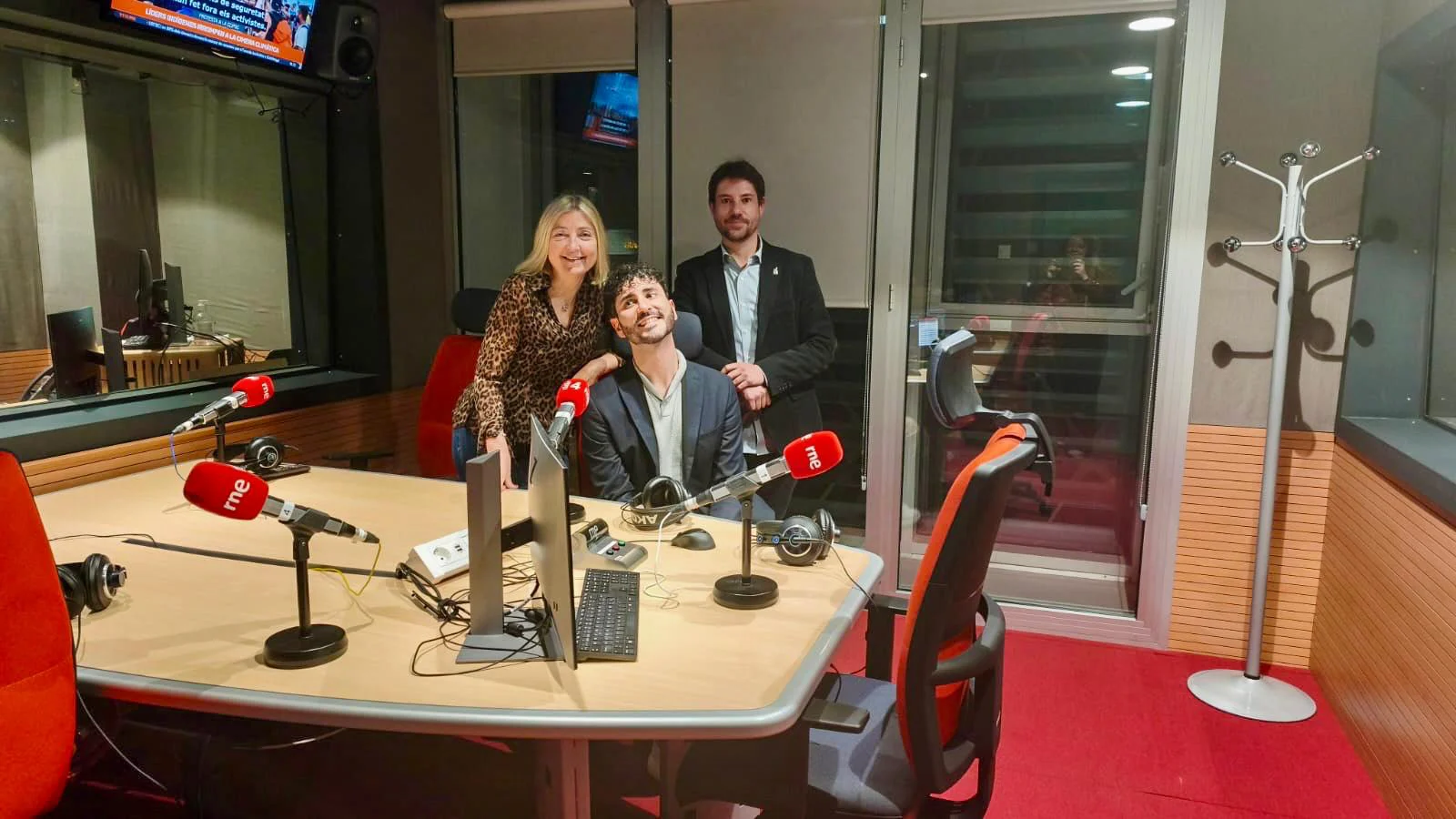
"Víctor Jiménez, the voice that discovers new paths" Full portrait, identity, mission, and restitution of historical repertoire with Marga Lluch & Pep Gorgori.
5 DEDICATED MONOGRAPHIC PROGRAMMES
A programme in which Catalan musicians share five personal thirty‑minute playlists that reveal their intimate musical universe through opera, lieder, symphonies, contemporary works, jazz, musicals, and the personal stories that shape their lives conducted by Rosa Maria Bartroli.

Víctor Jiménez Díaz, hosted by Rosa Maria Bartroli, presents a first musical selection intended to reflect what he felt when music first entered his life, marking the beginning of his inaugural playlist for Molt personal.

Víctor Jiménez Díaz speaks about two mentors who changed his life: the Catalan mezzo‑soprano Francesca Roig and David Mason, pianist, musicologist and communicator. This is our guest’s second musical selection for Molt personal.

In Víctor Jiménez Díaz’s third musical selection for Molt personal, our guest brings us music by John Dowland, Alessandro Scarlatti, Giuseppe Verdi and Georg Friedrich Händel. He also explains the principles of philological performance and speaks about his international debut as a concert artist.

In his fourth musical selection for Molt personal, Víctor Jiménez Díaz speaks about his international breakthrough in the world of music and the audiences with whom he feels a perfect connection. Our guest performs works by Antonio Vivaldi, Juan de Hidalgo and Claude Debussy.

In his fifth playlist for Molt personal, Víctor Jiménez Díaz speaks about various contemporary‑music projects and about women creators — from the composer Mariona Vila to the singer Victòria dels Àngels.

Víctor received an invitation to discuss countertenors, that male voice type with a very high register and a tessitura equivalent to that of a contralto. Víctor Jiménez Díaz will speak about countertenors and about his own artistic experience. Presented by Rosa Maria Bartroli, Músiques empoderades is Catalunya Música’s musical round‑table featuring Mar Medinyà, Marina Sala, Imma Trepat and Alba Nogueras.
MULTIPLE FEATURES ON IDENTITY, RESIDENCY & WOMEN'S HERITAGE
Víctor has long counted on the programme’s consistent support, led by Albert Torrens and Marta Lanau, which has provided him with the space and high‑quality airtime needed to present his professional work, articulate his social commitments, and outline the deeper artistic and personal motivations behind each project within Assaig general
Assaig General: "We delve into the production Petjada de dona."
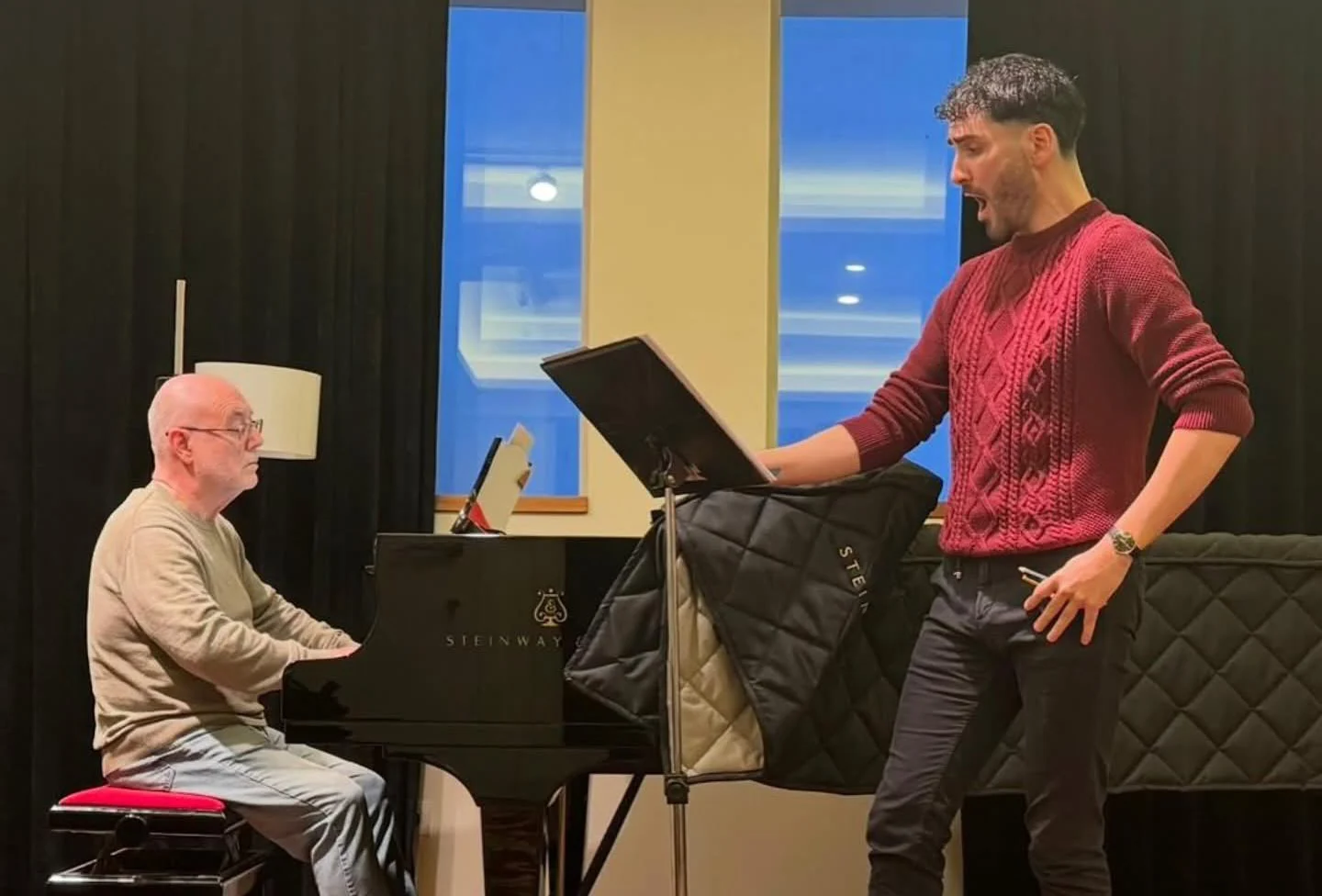
Víctor Jiménez Díaz and pianist‑composer Miquel Ortega premiere Petjada de dona, a new production arising from their long artistic relationship and conceived as a tribute to women’s creative influence in music and literature. World‑premiere music by Mariona Vila, Carlota Baldrís, Albert Guinovart and Ortega himself.
Assaig General: Víctor Jiménez Díaz presents the concert Reliquiari sacre in Barcelona.

Víctor Jiménez Díaz presents in Barcelona Reliquiari Sacre, a programme shaped by his rigorous musicological work, offering with pianist Manuel Ruiz Segarra a journey from early Vivaldi and Handel to Haydn, Bruckner and Fauré, as well as new contemporary music by Mariona Vila, concluding with his enduring focus on the English and Italian Baroque, all unified by a clear spiritual dimension.
Assaig General: Víctor Jiménez Díaz, resident musician at La Pedrera.

Víctor Jiménez Díaz, resident countertenor at La Pedrera, presents a three‑concert series including a world premiere by Raquel García Tomás, French repertoire, contemporary Barcelona composers and the recovery of eighteenth‑century manuscripts, all in collaboration with leading performers and Catalunya Música’s broadcast network.
CONSTANT CRITICAL RECOGNITION FROM CATALONIA'S LEADING CULTURAL JOURNAL
El Núvol, one of Catalonia’s most respected and academically grounded cultural publications, together with its specialised music supplement Castafiore, has offered sustained and in‑depth coverage of Víctor’s artistic work and personal commitments. Their rigorous critical approach has highlighted the complexity of his profile, the relevance of his discourse and the breadth of his contribution to contemporary creation—an attention for which Víctor has expressed public gratitude. This section gathers the interviews, reviews and citations published across both platforms.
INSIGHT ON EMOTION, VOCAL IDENTITY & ARTISTIC INFLUENCE
Víctor Jiménez: “Music must remain connected to emotion”
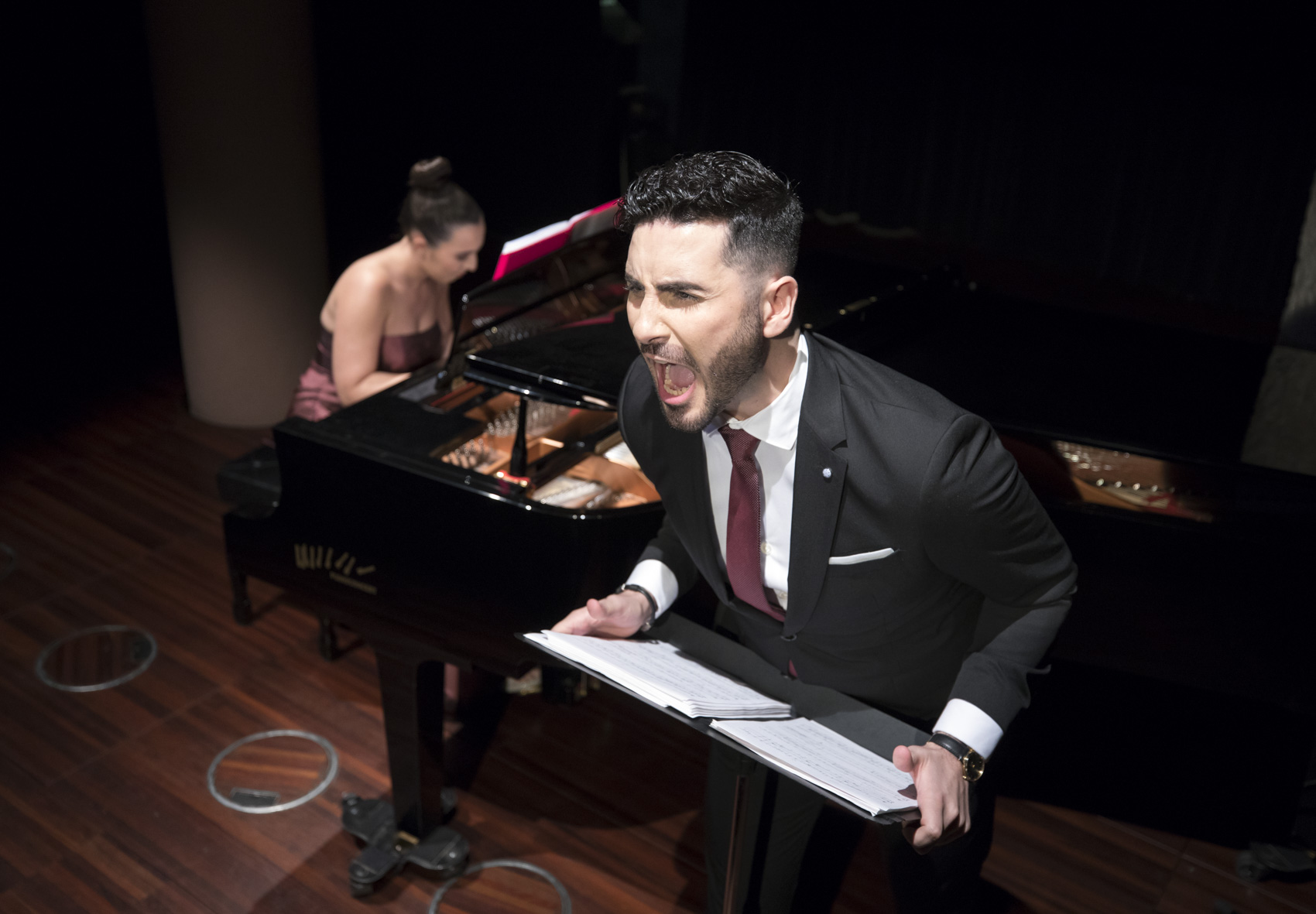
This feature from El Núvol offers a rigorous portrait of Víctor Jiménez Díaz’s artistic foundations, exploring his commitment to emotional truth in performance, the formative influence of Handel, Vivaldi, Montserrat Caballé and David Mason, and his broader vision of Baroque, contemporary creation and spiritual meaning in music.
A GENEALOGY OF CATALAN WOMEN COMPOSERS
Víctor Jiménez Díaz and pianist Marta Puig honour Catalan women composers in the concert Bufa, Musa Mia at the Auditori de Girona.
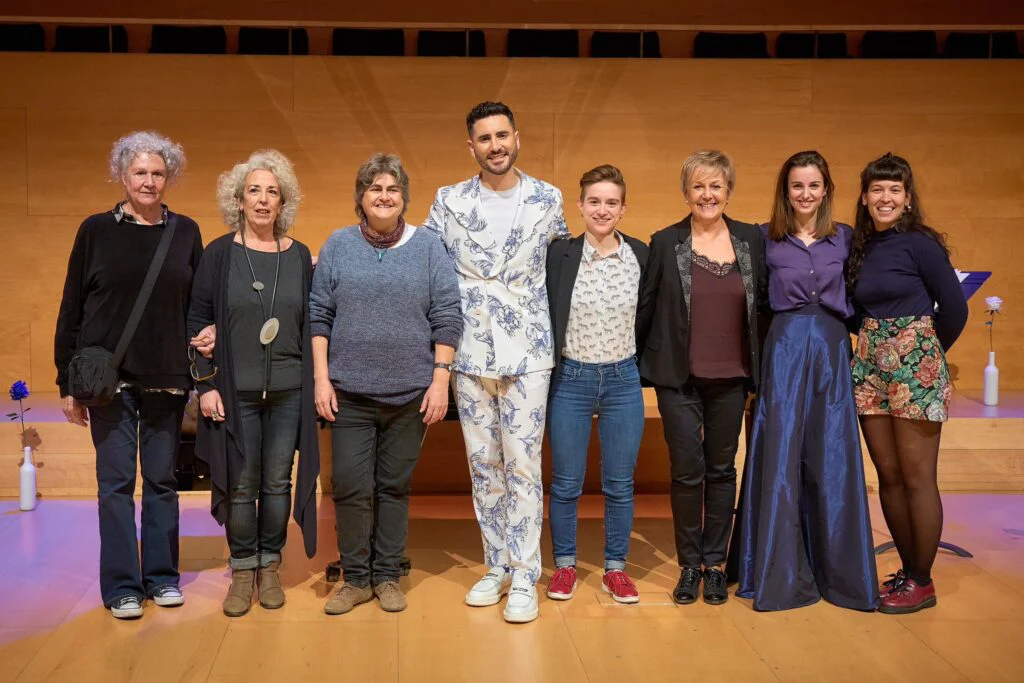
This feature from El Núvol documents the concert Bufa, Musa Mia, where Víctor Jiménez Díaz and pianist Marta Puig present nineteen works by nineteen Catalan women composers, restoring a lineage historically obscured by androcentric canon formation. The article highlights the project’s political intent—“to bring to the stage and interpret emotions, realities and voices that have historically been withheld”—and the duo’s role in giving visibility, context and continuity to a long‑interrupted tradition.
SPIRITUAL DEPTH & SACRED REPERTOIRE IN PERFORMANCE
Víctor Jiménez’s Golden Spirituality
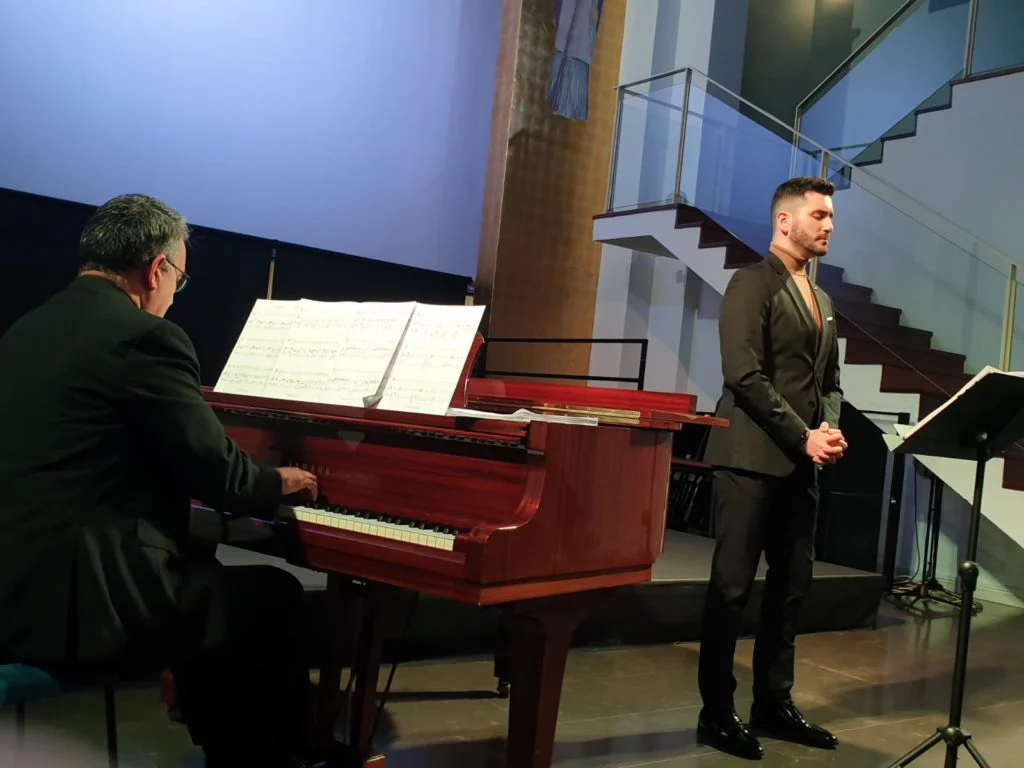
This review from El Núvol presents Víctor Jiménez Díaz’s Reliquiari sacre recital with pianist Manuel Ruiz Segarra, a programme spanning contemporary creation, French repertoire and English–Italian Baroque. It highlights the concert’s expressive intensity—“the voice projected powerfully throughout the hall”—and its focus on spirituality beyond religious context, showing Jiménez’s interpretative range and his deep connection to sacred repertoire.
Commitment to New Creation and Barcelona’s Living Composers
Víctor Jiménez’s Multifaceted Pedrera Residency
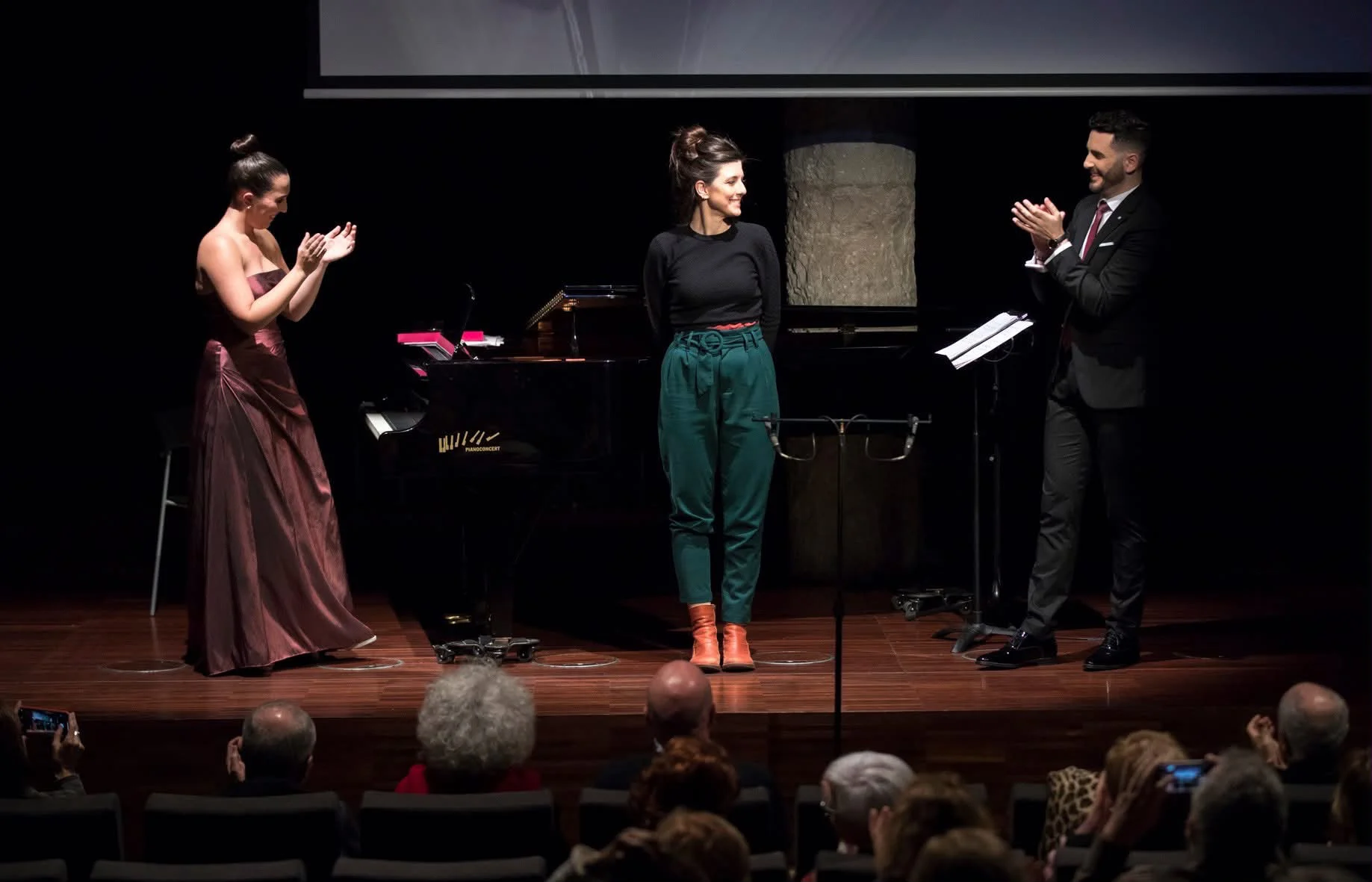
This review from El Núvol covers Víctor Jiménez Díaz’s second recital within La Pedrera’s Musical Residencies, featuring contemporary Catalan composers and the world premiere of Raquel García‑Tomás’s My Old Gramophone #2. The article emphasises the project’s commitment to local creation and Jiménez’s versatility—“a rare phenomenon: two living composers in the front row”—while highlighting his expressive range across contrasting contemporary works.
SCHERZO: ARTISTIC VISION, CONTEMPORARY CREATION & HERITAGE REVIVAL.
Scherzo has documented Víctor Jiménez Díaz’s work across contemporary creation, diversity‑driven programming and the revival of historical repertoire. The magazine highlights his commitment to living composers, inclusive artistic narratives and the recovery of previously unknown works, positioning him as a versatile countertenor with a clear curatorial identity.
Commitment to Diversity, Inclusion & New Creation
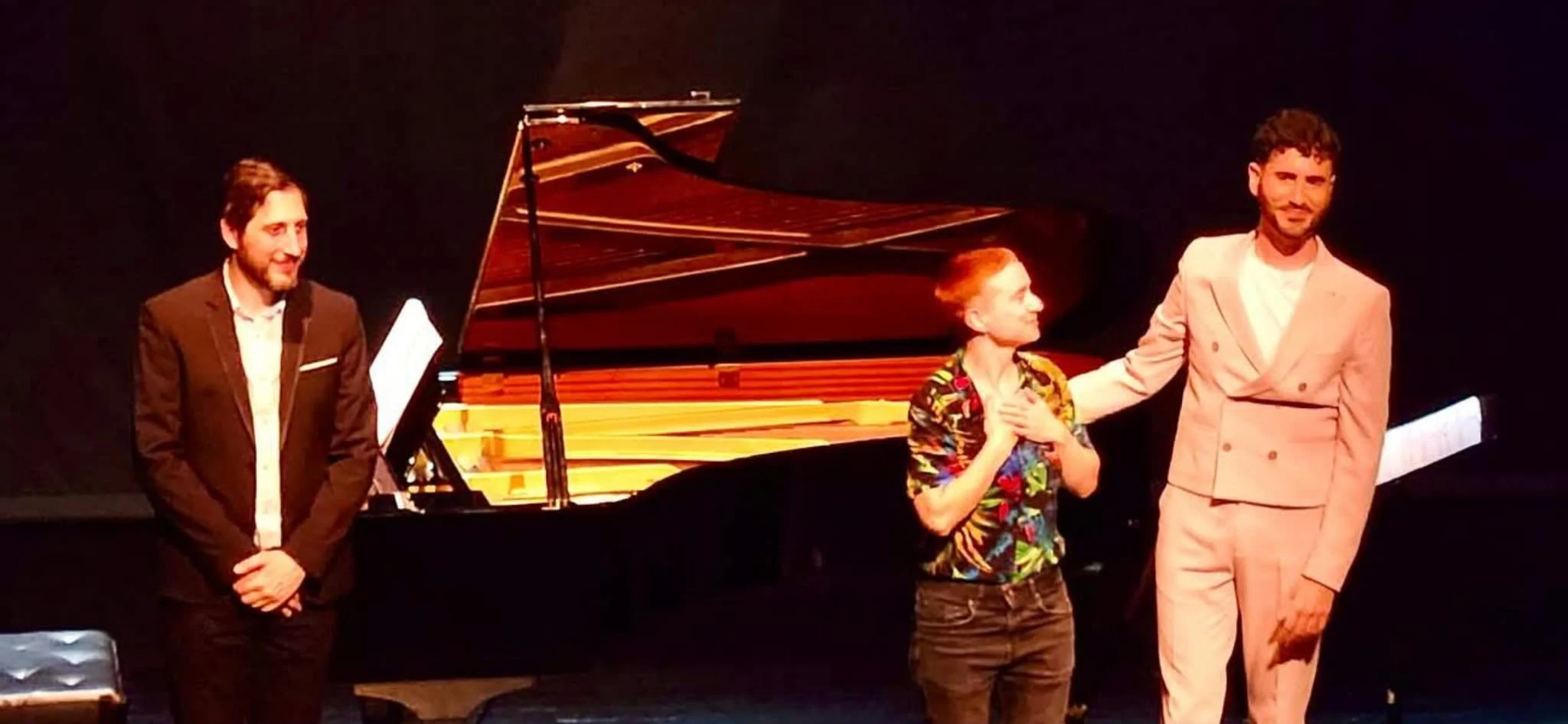
This feature from Scherzo presents Víctor Jiménez Díaz’s Fins a l’Arrel recital at Lloret de Mar, a programme dedicated to diversity, inclusion and LGTBIQ+ representation in classical music. The article highlights his commitment to women composers and living creators—“a programme that brings together Schubert, Smyth, Clarke, Heggie and Baulies”—and closes with the premiere of Fins a l’Arrel, written for him and dedicated to the LGTBIQ+ community.
Reviving Unheard Baroque Voices
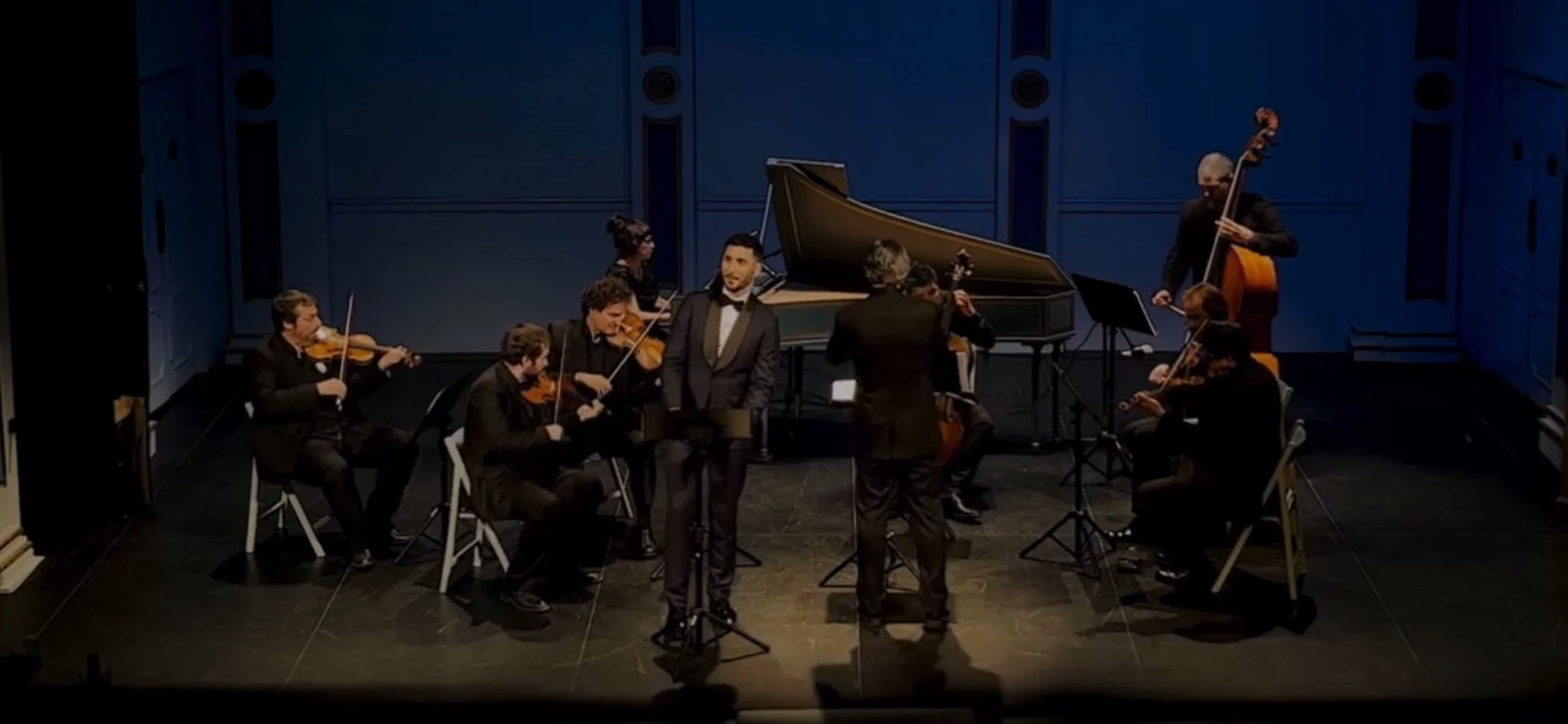
This feature from Scherzo presents Víctor Jiménez Díaz’s concert Cantadas de Corselli at El Real Coliseo Carlos III, performing four previously unpublished cantatas for contralto with the Camerata Antonio Soler. The article highlights the historical relevance of the programme—“a selection of sacred cantatas, almost all unpublished”—and situates Jiménez within current efforts to recover and reintroduce Corselli’s work to modern audiences.
INTERVIEWS: ARTISTIC VISION, CONTEMPORARY CREATION & HERITAGE REVIVAL.
These four interviews document Víctor Jiménez Díaz’s artistic integrity, his commitment to cultural responsibility and his merit‑based professional identity. They present a countertenor with a clear ethical stance, a rigorous approach to historical repertoire and a belief in music as a form of public service and representation.
Codalario: International Trajectory & Artistic Identity

This interview highlights structural issues in the Spanish market—“in Spain I had to pay to sing, while two or three projects abroad allowed me to live for the entire year”—and presents him as a countertenor with a distinct artistic identity, rigorous technique and a strong curatorial vision.
El Nacional (La Llança): Merit‑Based Artistic Career

The interview emphasises his ethical stance—“I want to build a career based only on artistic merit”—and his refusal to rely on shortcuts, favouritism or opportunistic visibility, reinforcing his integrity and long‑term artistic principles.
ProÓpera: Opera as Democratic Cultural Practice (México).

He reflects on the social function of early opera—“in the Baroque, the operatic genre is born and becomes democratized”—and discusses the cultural responsibility of performers when approaching historical repertoire.
Cerdanyola.info: Interpretation, Depth & Artistic Soul
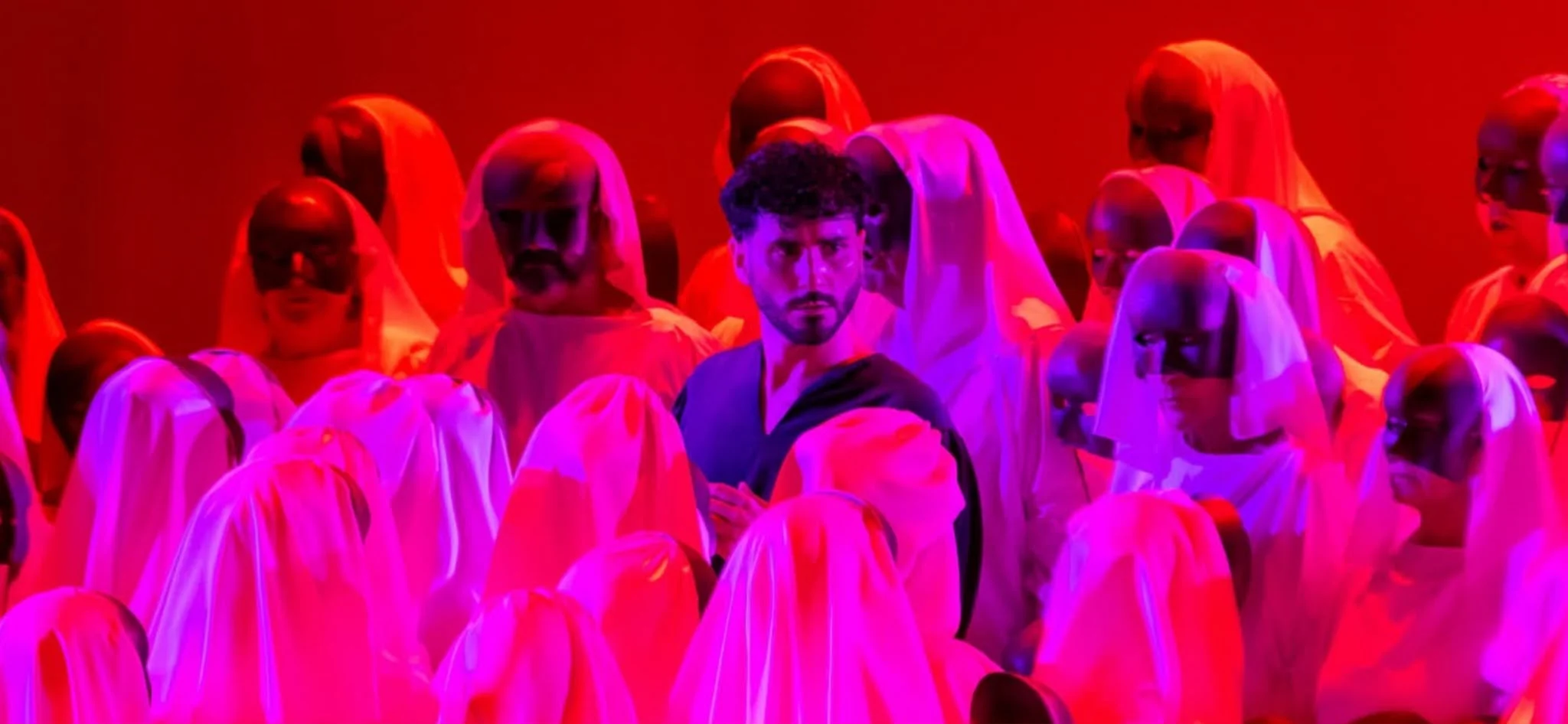
The article highlights his interpretative philosophy—“many do their job well; the difference is putting your soul into it”—and his belief in expressive depth, responsibility and emotional truth in performance.